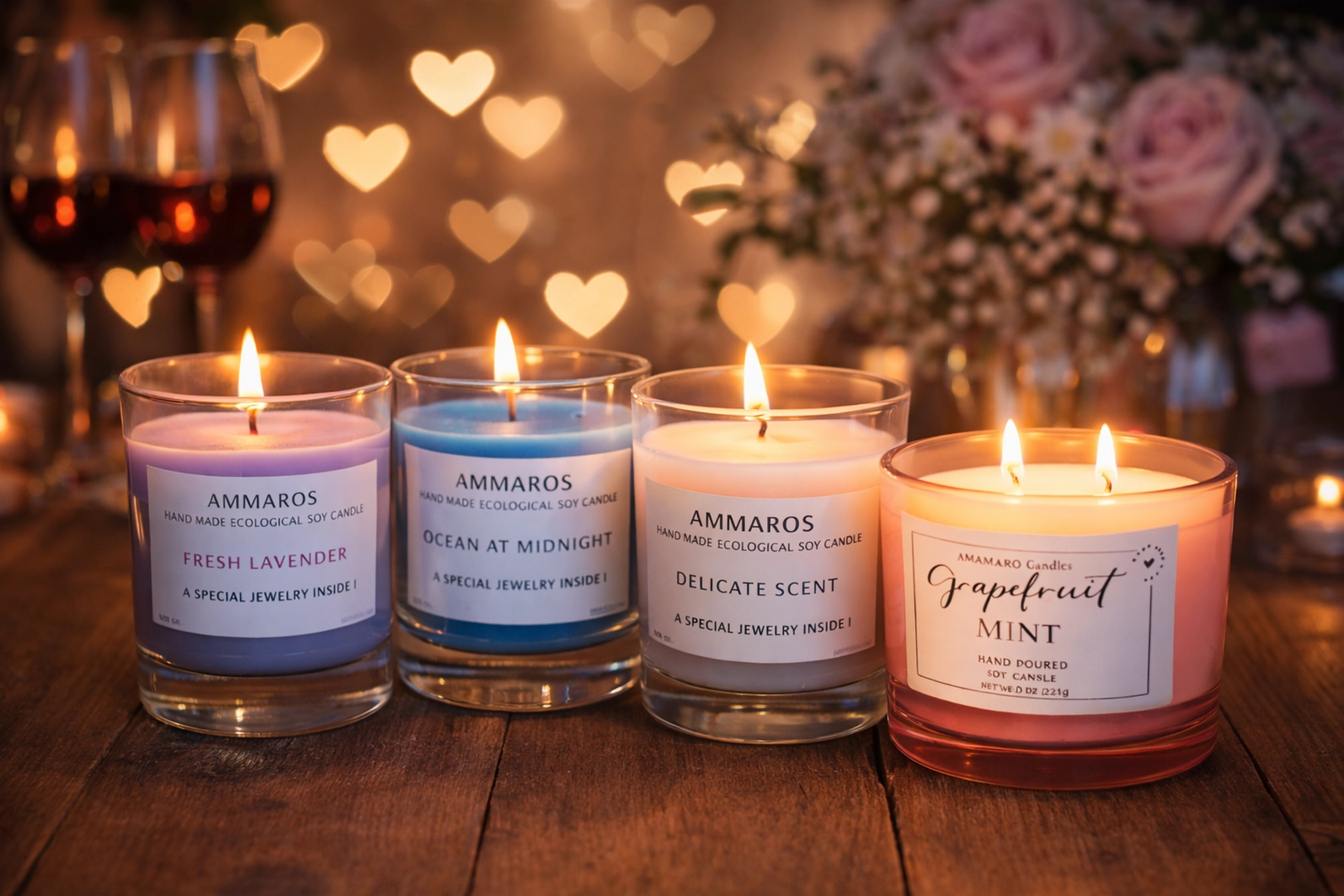
Soy candles have quietly become one of the most popular “everyday luxury” items in homes, offices, studios, and gift boxes around the world. You’ll find them in minimalist jars on a bedside table, in cozy kitchens during weekend baking, and in living rooms during movie nights. For many people, a soy candle isn’t just a source of scent—it’s part of a ritual: light the wick, soften the day, and let the room become calm.
But what exactly is a soy candle, and why has it earned such a strong fan base? This guide breaks down the basics in a clear, practical way. You’ll learn what soy wax is made from, how soy candles behave, what makes them different from other candle types, and how to choose a great one that performs well and smells amazing.
What Is a Soy Candle?
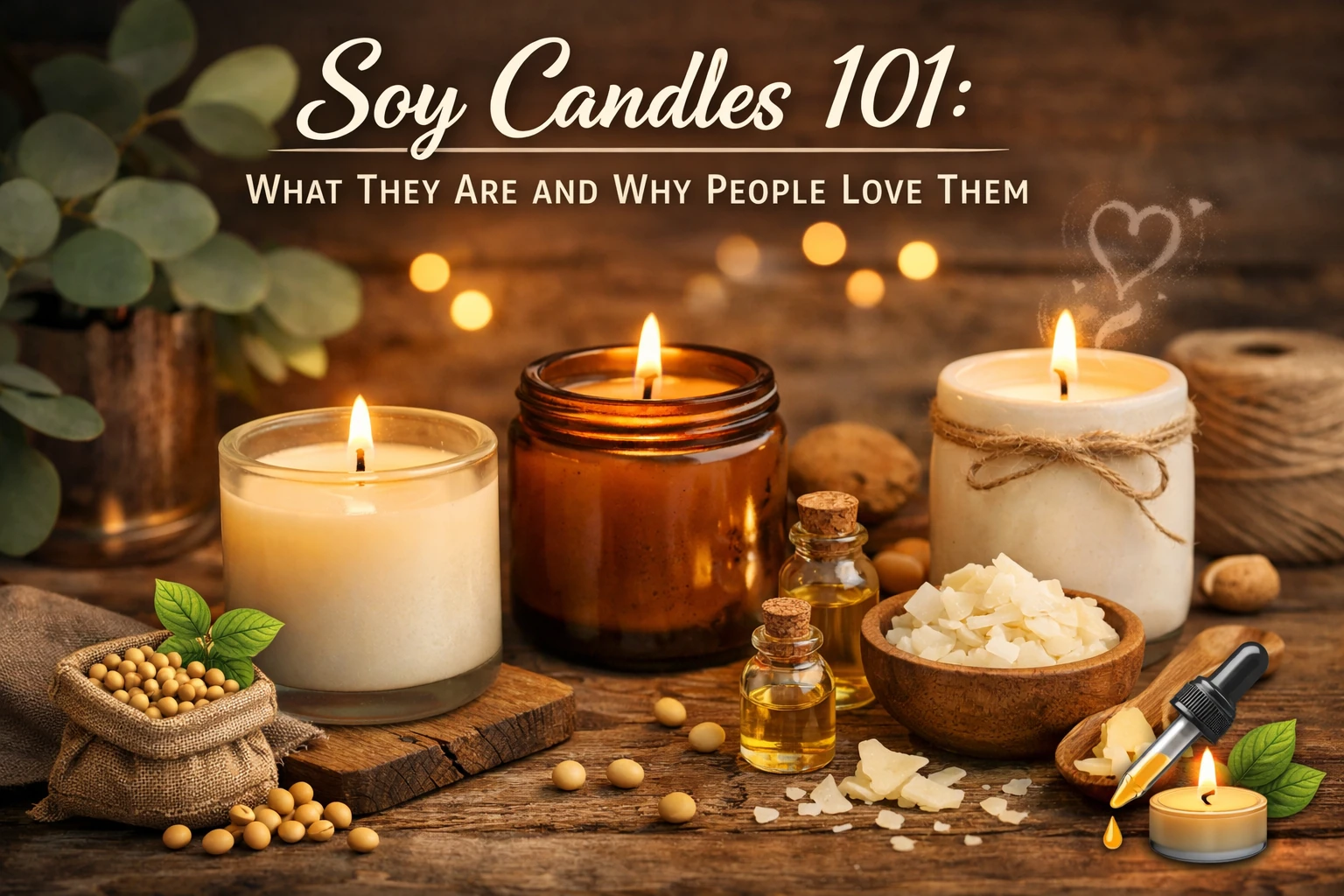
A soy candle is a candle made primarily from soy wax, a vegetable-based wax derived from soybean oil. The oil is processed into a waxy, solid form that can be melted, blended with fragrance (or essential oils), and poured into containers or molds. Once it cools and sets, it becomes the smooth, creamy wax you recognize in many modern candles.
Most soy candles are container candles—meaning the wax is poured into jars, tins, or ceramic vessels. That’s because soy wax tends to be softer than some other waxes, which makes it especially well-suited for containers that support the wax as it burns.
While many products are marketed as “soy candles,” it’s worth noting that some are blends, combining soy wax with other waxes to improve certain characteristics like scent strength, hardness, or burn stability. A true soy candle is typically made with 100% soy wax, but blends can still be excellent—especially when they’re clearly labeled and responsibly formulated.
What Is Soy Wax Made From?
Soy wax starts as soybean oil. The oil undergoes a process called hydrogenation, which changes the oil’s structure so it becomes solid at room temperature. The result is a wax with a smooth texture that melts at relatively low temperatures compared to some other candle waxes.
The final performance of soy wax depends on the specific blend and additives used by the manufacturer. Different soy wax formulations are designed for different uses—some are meant for containers, while others are designed to be hard enough for pillar candles and wax melts. That’s why one soy candle can feel creamy and soft, while another might be firmer or have a slightly different finish.
Why People Love Soy Candles
Soy candles have a reputation for being an easygoing, friendly candle choice—pleasant to use, simple to maintain, and often associated with clean aesthetics and relaxing spaces. But the love goes deeper than looks. There are a few key reasons soy candles have become a go-to choice for many candle fans.
One big reason is their burn style. Soy candles typically burn slowly and evenly when properly wicked and cared for. People enjoy the way soy wax melts into a calm pool and gives off a steady, cozy glow without feeling too aggressive or overpowering.
Another reason is the general preference for plant-based materials. Many buyers like the idea of a candle wax derived from a renewable crop, especially when compared to wax types that are fossil-fuel derived. This preference often aligns with a broader lifestyle trend: choosing simple, home-friendly products that feel more mindful and intentional.
Soy wax is also known for being easier to clean up than some other waxes. If you’ve ever spilled candle wax on a table or counter, you know how helpful it is when the wax can be cleaned with warm water and soap. For many people, that small convenience matters a lot.
Soy Candles vs Paraffin Candles
Paraffin wax candles have been common for decades. Paraffin wax is derived from petroleum and is widely used because it’s cost-effective, easy to manufacture, and can produce strong scent throw in many formulations. Soy wax, on the other hand, is plant-based and generally marketed as a more “natural-feeling” option.
The difference most people notice day-to-day is burn behavior and cleanup. Many soy candles burn slower and can last longer ounce-for-ounce in container form, while paraffin candles often excel at throwing scent quickly and strongly. Neither is automatically “better” in every scenario—some paraffin blends are exceptional, and some soy candles are weak performers if not properly made. But for shoppers who value a gentle burn and a plant-based wax, soy is an easy favorite.
Soy Candles vs Beeswax Candles
Beeswax candles are made from natural wax produced by honeybees. They’re often prized for their warm glow, subtle honey-like aroma, and traditional appeal. Beeswax is typically harder than soy wax and is commonly used for tapers and pillars, although it can also be used in containers.
Compared to beeswax, soy tends to be more accessible in price and is especially popular for fragranced candles. Beeswax has its own devoted fans, but soy is often seen as a more flexible choice when you want a wide range of scents, a modern look, and a gentle everyday candle for frequent use.
Soy Candles vs Coconut Wax Candles
Coconut wax has gained popularity in premium candles because of its smooth texture and strong scent performance in many blends. Coconut wax candles are often luxurious, but they can be more expensive. Soy wax remains the most common plant-based candle wax in mainstream markets, balancing performance and affordability.
If you love strong, room-filling fragrance and a high-end finish, coconut wax blends can be wonderful. If you want something reliable, widely available, and easy to shop for, soy wax candles are usually easier to find and often more budget-friendly.
How Soy Candles Smell: Understanding “Scent Throw”
Candle lovers often talk about scent throw, which simply means how well a candle releases fragrance into the air. There are two types of scent throw: cold throw (how a candle smells when it’s unlit) and hot throw (how it smells while burning).
Soy wax can offer beautiful scent throw, but it’s more sensitive to proper formulation. A soy candle’s fragrance performance depends on the quality of the fragrance oil, the percentage used, the wick type, the container size, and even how long the candle was cured after pouring. This is why two soy candles with the same scent name can perform very differently depending on the maker.
In general, soy candles tend to build scent more gradually and evenly. Instead of hitting you with a heavy burst immediately, a good soy candle often feels smoother—like the room is gently filled rather than aggressively scented. For many people, that’s a major part of the appeal.
Burn Time: Do Soy Candles Really Last Longer?
Many shoppers buy soy candles because they’ve heard soy wax burns longer. While “longer” isn’t guaranteed for every candle, soy wax typically has a lower melting point and can burn slower when the wick is properly matched to the container. That slow burn is a big reason people feel like they get more use out of a soy candle compared to a similarly sized candle made from a different wax.
Burn time still depends heavily on candle design. A thick wick or multiple wicks can burn faster than a single smaller wick, and wide containers can melt more wax quickly. If you want maximum burn time, look for a candle that has a controlled flame, an even melt pool, and a reputable maker known for balanced wick choices.
What Does “Clean Burning” Really Mean?
You’ll often see soy candles described as “clean burning.” In everyday terms, this usually means a candle is less likely to produce heavy soot when properly burned. Many people notice that soy candles can be gentler on walls, ceilings, and candle jars over time, especially if the wick stays trimmed and the candle isn’t burned in a draft.
Still, any candle can create soot if it’s burned incorrectly. A wick that’s too long, a candle burning near an air vent, or a flame that flickers aggressively can all increase smoke. The key is candle care: trim the wick, let the wax melt evenly, and keep it away from moving air.
Common Myths About Soy Candles
Because soy candles are popular, there are plenty of myths floating around. One myth is that all soy candles are always better than other candle types. In reality, candle quality depends on manufacturing and materials, not just wax type. A well-made paraffin blend can be fantastic, and a poorly made soy candle can tunnel, smoke, or smell faint.
Another myth is that soy candles are always 100% soy wax. Some are, but others are blends. That’s not automatically a bad thing—blends can improve performance—but it’s good to know what you’re buying. If you want a pure soy candle, look for “100% soy wax” on the label and check the brand’s product description.
A third myth is that soy candles never frost. Soy wax often develops a natural “frosting” effect: a soft, cloudy look on the surface or sides of the glass. This is normal and doesn’t mean the candle is defective. Many candle makers consider frosting a natural sign of soy wax, similar to how wood grain varies naturally in furniture.
How to Choose a Great Soy Candle
Choosing a soy candle is part scent-shopping, part quality-shopping. A candle can smell wonderful in the jar but burn poorly if the wick and wax aren’t well matched. The best soy candles usually come from brands that care about formulation and testing rather than only focusing on packaging.
Look at the wick type and how the candle is poured. A centered wick helps ensure an even melt pool. Multiple wicks can be great for wide containers because they reduce tunneling and create a stronger hot throw, but they should still burn calmly without huge flames.
Consider the container size in relation to the room you want to scent. A small candle can feel perfect in a bedroom or office but may disappear in a large open living room. For bigger spaces, a larger jar or a candle with multiple wicks often performs better.
If you’re sensitive to strong fragrance, soy candles can be a pleasant choice because many release scent gradually. If you want something bold and strong, look for soy candles from makers who specifically highlight strong hot throw and use fragrance oils known for performance.
Candle Care: Getting the Best Burn Every Time
The way you burn a soy candle matters a lot. The first burn sets the stage for future burns, especially in container candles. If the candle doesn’t reach a full melt pool across the surface, it may develop tunneling, where wax remains stuck to the sides and the candle burns down the center.
For best results, let your candle burn long enough on the first use for the wax to melt edge to edge. This can take time depending on the candle size. After that, keep the wick trimmed so the flame stays stable and doesn’t produce excess smoke.
Try to keep candles away from drafts, fans, and air conditioning vents. Moving air can cause uneven burning, flickering flames, and soot. A calm environment leads to a smoother burn and better scent performance.
Why Soy Candles Make Great Gifts
Soy candles are a popular gift because they feel personal without being risky. Scents often connect with memory and mood, and a candle can make a home feel instantly warmer. A well-chosen fragrance can say “I thought of you” in a simple way.
They also fit many styles and budgets. You can find small soy candles that feel sweet and thoughtful, or premium candles in beautiful vessels that feel like a special occasion gift. Many people reuse the jars afterward for pens, plants, makeup brushes, or small storage, which adds a practical bonus.
The Cozy Factor: Why Candles Feel So Comforting
Part of the soy candle appeal is simply how they make a space feel. Candlelight is softer than overhead lighting. It reduces harsh edges and makes rooms look calm and welcoming. Add a gentle fragrance, and your brain starts to associate the moment with comfort.
Many people create routines around candles. A morning candle can make a work-from-home setup feel more focused. An evening candle can signal the transition from a busy day to rest. It’s a small sensory cue that helps life feel a bit more intentional.
Are Soy Candles Worth It?
For many people, yes. Soy candles are loved because they combine a cozy atmosphere with a plant-based wax and a burn style that feels smooth and steady. They’re easy to shop for, easy to gift, and easy to enjoy without needing any special knowledge.
The best soy candles are the ones that are well-made: thoughtfully wicked, properly blended, and poured with care. When you find a candle like that, it doesn’t just smell good—it becomes part of your space and your daily rhythm.
Whether you’re lighting one for relaxation, creating a signature scent for your home, or giving someone a small comfort in a jar, soy candles have earned their popularity for a reason. They’re simple, cozy, and surprisingly powerful in how they shape the feeling of a room.