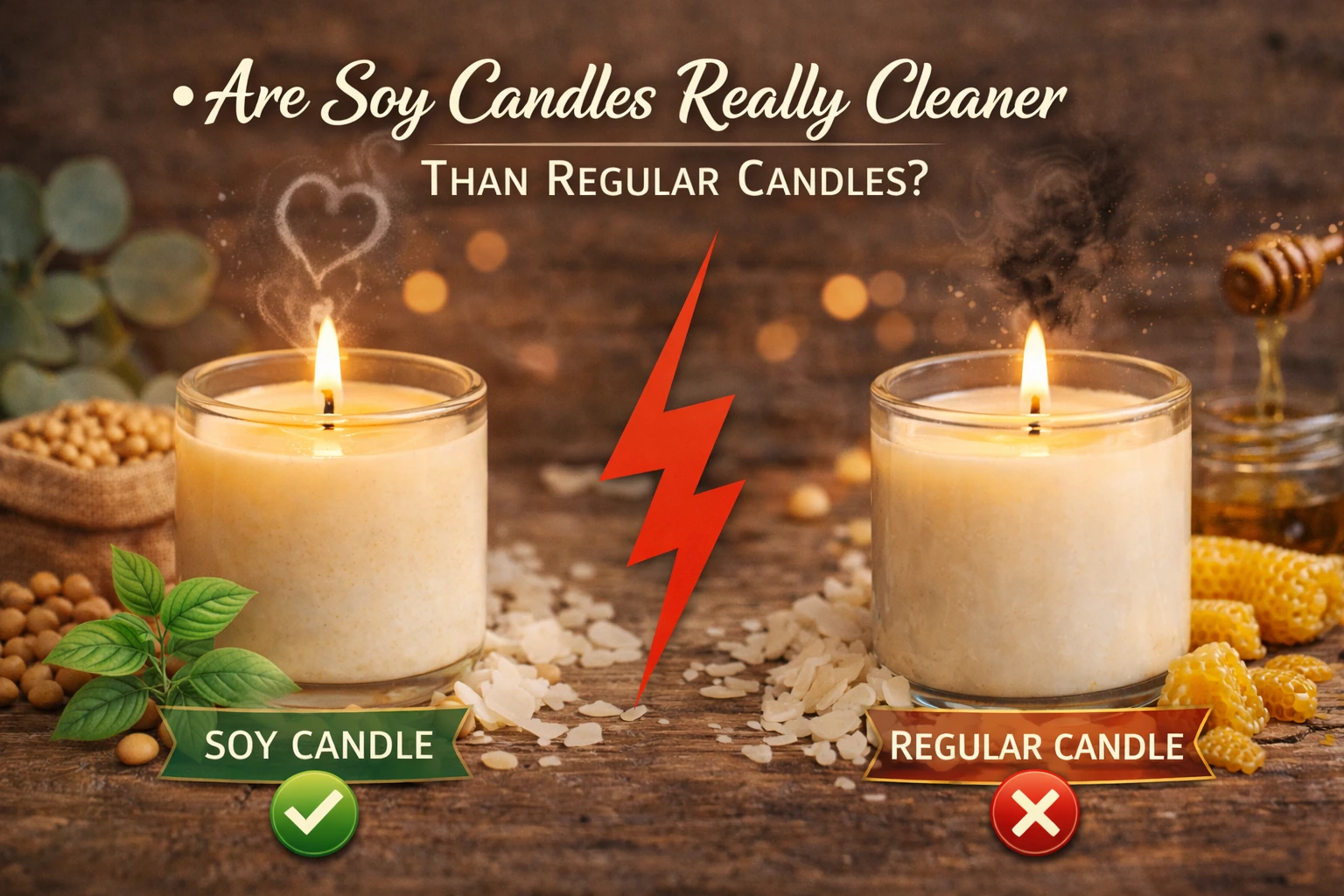
Soy candles have become a popular choice for people who love a cozy atmosphere but want something that feels “cleaner” than traditional candles. They’re often marketed as a healthier option, a more eco-friendly alternative, and a better choice for indoor air quality. But what does “cleaner” really mean when it comes to candles, and does soy actually deliver on the promise?
The honest answer is that soy candles can burn cleaner than many regular candles, but not always, and not automatically. The cleanliness of a candle depends on more than the wax. The wick, fragrance oils, dye, burn habits, and even the size of the flame all influence whether a candle produces smoke, soot, and lingering odors. Understanding these factors makes it much easier to choose a candle that performs well and keeps your home feeling fresh.
What People Mean When They Say “Cleaner Burning”
When someone says a candle burns “clean,” they usually mean it produces less visible smoke, less black soot on walls or ceilings, and fewer strong chemical-like odors while burning. Clean burning also tends to mean a steadier flame, fewer “mushroom” wick tips, and less residue left behind in the container.
This matters because soot is essentially tiny particles released into the air, and over time it can stick to surfaces. In homes where candles are used frequently, you might notice faint gray marks near air vents, on shelves, or above the candle’s usual spot. A cleaner candle is one that minimizes these effects under normal use.
The tricky part is that candle performance is not only about wax type. Two soy candles can burn very differently depending on how they are made. The same is true for paraffin and beeswax candles. Clean burning is the result of multiple design choices working together.
Soy Wax vs “Regular” Wax: What’s the Difference?
Most “regular” candles sold in stores are made from paraffin wax, which is a petroleum-derived wax. Paraffin is popular because it’s inexpensive, holds fragrance well, and produces a strong scent throw with minimal effort. It also tends to have a smooth appearance and predictable performance at scale.
Soy wax is made from soybean oil that has been hydrogenated into a solid wax. It became mainstream because it is plant-based and often associated with being more renewable. Many soy candles are also marketed as lower-soot and longer-burning, especially when compared to cheaper paraffin candles.
That said, a lot of candles labeled “soy” are not always 100% soy wax. Some are soy blends that include paraffin or other waxes. This doesn’t automatically make them bad, but it can change how they burn and how “clean” they feel in real-world use.
Does Soy Wax Actually Produce Less Soot?
In many cases, soy candles can produce less soot than lower-quality paraffin candles, especially when the soy candle is well-wicked and burned correctly. Soy wax typically melts at a lower temperature and can encourage a calmer burn when everything is balanced properly.
However, soot isn’t created only because of wax type. Soot is often the result of incomplete combustion. If the flame is too large, the wick is too long, there’s too much fragrance load, or the candle is in a drafty area, even a soy candle can smoke and leave black residue.
In other words, soy wax can be part of a cleaner candle, but it is not a magic ingredient that guarantees a perfectly soot-free burn.
Why Some Candles Smoke: The Real Causes
If you’ve ever lit a candle and noticed the flame flickering wildly, dark smoke rising, or a slightly burnt smell, you’ve seen what happens when a candle is not burning efficiently. The most common causes are surprisingly simple:
Wick length is a major factor. A wick that is too long creates an oversized flame. Oversized flames generate more heat than the wax can properly feed, which can lead to smoke and soot. This is why trimming the wick is one of the most important candle habits.
Drafts also matter. Burning a candle near an open window, a fan, or an air conditioner vent makes the flame dance and bend. That instability increases the chance of soot because the candle is no longer burning in a steady, controlled way.
Fragrance overload is another cause. Some candles are heavily scented to deliver a powerful throw, but too much fragrance oil can impact the combustion process. When a candle struggles to burn the wax and fragrance cleanly, it may produce smoke or create a heavy, “dirty” scent in the room.
Wrong wick type can make even premium wax burn poorly. Candle makers choose wicks based on container size, wax blend, fragrance amount, and desired flame temperature. A wick that is too thick can run hot, while a wick that is too thin might tunnel and cause uneven burning that leads to additional problems.
The Wick Matters as Much as the Wax
When comparing soy candles to “regular” candles, the wick often makes a bigger difference than people expect. A high-quality candle usually pairs wax and wick carefully to maintain a stable, medium-size flame.
Cotton wicks are common and can burn well when properly sized. Wood wicks create a cozy crackle, but they require careful engineering to avoid weak flames or excessive smoking. Some candles use specialty wicks designed to reduce soot and stabilize the burn.
A soy candle with the wrong wick can behave worse than a paraffin candle that has been carefully formulated. That’s why it’s smarter to evaluate a candle as a complete product, not just by its wax label.
Fragrance and Additives: The “Hidden” Variables
Many people buy candles mainly for scent. But fragrance is one of the biggest reasons a candle may not feel “clean.” Whether the wax is soy or paraffin, the ingredients used for fragrance can affect the experience.
Some candles use fragrance blends that smell smooth and natural. Others smell sharp, synthetic, or heavy, especially in small rooms. Even if a candle produces minimal soot, the fragrance can still feel overwhelming or irritating to some people.
Dyes and decorative additives can also change burn behavior. Highly dyed candles, glittered candles, or candles with embedded items may not burn as predictably. A steady, balanced burn usually comes from a simpler formula.
If you’re sensitive to fragrances, choosing lightly scented candles or unscented candles is often more effective than focusing only on soy versus paraffin.
Indoor Air: What to Expect When Burning Any Candle
Any candle produces byproducts while burning because combustion is occurring indoors. Even clean-burning candles release small amounts of particles and gases, especially if they are fragranced. This doesn’t mean candles are automatically “toxic,” but it does mean that ventilation and moderation are smart.
If you want the cleanest possible candle experience, pay attention to how the room feels. A candle should enhance the atmosphere, not make the air feel heavy. If you notice irritation, headaches, or a lingering smoky smell, it may be a sign to switch scents, reduce burn time, or improve airflow.
For households with asthma or fragrance sensitivities, it often helps to choose unscented or very mild candles and to avoid burning them for long periods in small, closed rooms.
Are Soy Candles Better for People with Allergies?
This is a common question, and the answer depends mostly on fragrance, not wax. A soy candle that contains a strong, complex fragrance blend can still trigger symptoms for someone who is sensitive. Meanwhile, an unscented candle made from another wax might feel perfectly fine.
If allergies or sensitivities are a concern, consider starting with an unscented candle and observing how it feels. If you do want scent, choose lighter fragrance profiles and burn them briefly at first. The goal is to make your space feel comfortable, not overloaded.
Also, remember that soot can be irritating to breathe in. Choosing a candle that burns steadily and trimming the wick can reduce the chance of smoky air, regardless of wax type.
How to Tell If a Candle Is Burning Cleanly
The best way to judge a candle is by what happens when it’s actually lit. A clean-burning candle usually shows these signs:
The flame looks stable and calm rather than tall and wild. The wick doesn’t grow a thick “mushroom” cap quickly. You don’t see black smoke when the candle is burning normally. The jar stays relatively clear instead of developing dark stains near the top.
The scent should feel smooth and comfortable in the room. If it smells burnt, sharp, or overly heavy, the candle may be struggling to burn efficiently or the fragrance blend may be too intense for the space.
A candle that tunnels deeply or burns unevenly is often not performing optimally. While this doesn’t always mean it’s “dirty,” it can lead to wasted wax, poor scent throw, and increased chance of soot as the burn becomes unstable.
The Burn Time Myth: Does Soy Always Last Longer?
You may hear that soy candles last longer than regular candles. This can be true because soy wax often burns more slowly, especially in properly formulated candles. A slower burn means the candle can last more hours per ounce of wax.
But burn time depends on the wick size, container width, and how hot the candle burns. A soy candle with an oversized wick can burn faster than expected. A paraffin candle with an efficient wick can last longer than a poorly engineered soy candle.
The best indicator of burn time is the manufacturer’s listed burn hours, paired with real-life performance. If you take care of the candle and burn it correctly, you’ll get much closer to its intended lifespan.
What About Beeswax and Other Alternatives?
Soy versus paraffin is the most common comparison, but it’s not the only choice. Beeswax candles are often described as naturally pleasant and are sometimes preferred for their simple ingredient profile. They can be a great option for people who want something minimally processed and often unscented.
There are also coconut wax candles, rapeseed wax candles, and various blends. Many premium brands use blends to achieve a specific burn style and scent performance. A well-made blend can be “cleaner” in practice than a poorly made candle made from a single wax type.
If your main goal is a clean burn, focus on craftsmanship and burning habits rather than treating one wax as automatically superior.
How to Make Any Candle Burn Cleaner at Home
Even the best candle can smoke if it’s not used correctly. Luckily, small habits make a noticeable difference, and they help soy candles and regular candles perform their best.
Trim the wick before each burn. A shorter wick helps maintain a stable flame and reduces soot. If the wick forms a mushroom tip, snip it off once the candle cools.
Keep candles away from drafts. A calm flame burns more efficiently than a flickering one. Avoid placing candles near vents, open windows, or fans.
Let the wax melt evenly across the top during the first burn. This helps prevent tunneling and encourages an even melt pool. An even melt pool means the candle won’t struggle later in its life.
Burn candles in reasonable sessions. Very long burns can overheat the container, stress the wick, and make the flame grow too large. Shorter, controlled burns usually keep the candle cleaner.
Use the right candle size for the room. A small candle in a large room may not scent the space effectively, while a powerful candle in a small room can feel overwhelming and heavy.
So, Are Soy Candles Really Cleaner Than Regular Candles?
Soy candles are often a cleaner-feeling choice because many of them are designed to produce less soot and burn more gently. In many homes, a well-made soy candle can leave less residue, look clearer on the container, and create a lighter experience than a bargain paraffin candle.
But soy is not automatically perfect. A soy candle can still smoke if the wick is too long, if it’s burned in a drafty space, or if the formula is overloaded with fragrance and dyes. And a carefully crafted paraffin candle can burn very cleanly when it’s properly balanced.
The most reliable way to find a cleaner candle is to look for thoughtful design and consistent performance: steady flame, minimal soot, comfortable scent, and a clean-looking jar. When you combine a high-quality candle with good burning habits, soy and regular candles can both deliver a cozy glow without leaving your home feeling smoky.
What to Look for When Shopping for a Cleaner Candle
If you want the best chance of a cleaner burn, focus on details that matter in the real world. Look for candles with clear labeling, high-quality wicks, and a reputation for steady performance.
Choose candles that don’t produce visible smoke and don’t leave black marks on the container after a few burns. If you want fragrance, choose scents that feel smooth rather than harsh. If you’re unsure, start with light scents or unscented candles.
Finally, remember that candle care is part of candle quality. A clean burn is a partnership between the product and the way it is used. With the right candle and a few smart habits, you can enjoy the warmth and comfort of candlelight with a fresher, cleaner-feeling finish.