Joomla-ready HTML article (no numbering).
“Luxury” is one of the most used words in the candle world—and one of the least defined. Two jars can look similar on a shelf, yet one sells for a modest price and the other is positioned as a premium, gift-worthy centerpiece. So what is actually changing? Is it just branding, or are there real design and material choices behind a luxury candle experience?
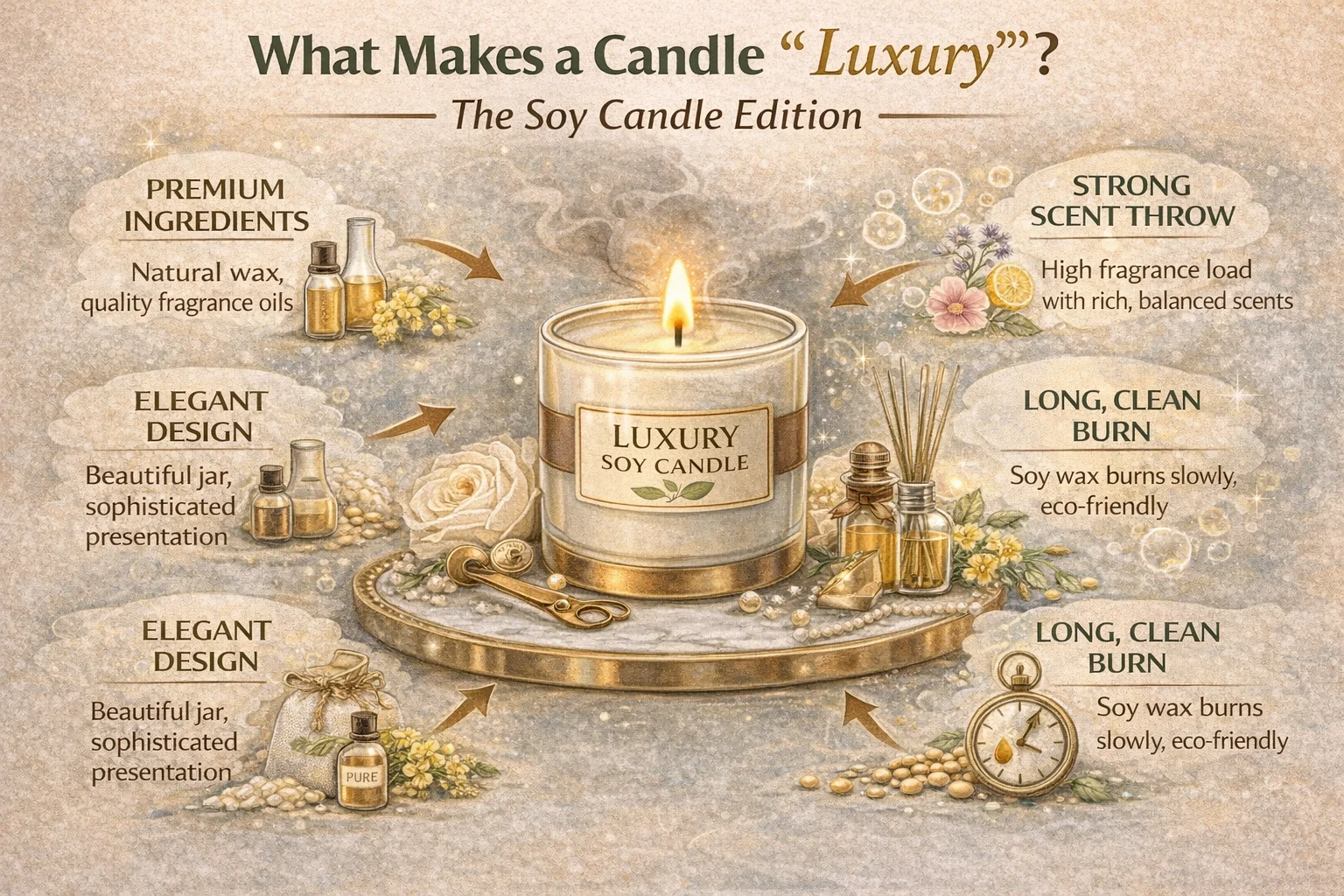
In the soy candle space, luxury usually isn’t about one single ingredient. It’s about the total experience: how the candle looks, how it burns, how it smells over time, and how it makes a room feel—before you even light the wick. A true luxury soy candle is engineered for consistency, comfort, and atmosphere. It’s the kind of product that feels intentional from the first touch to the last burn.
This guide breaks down the practical details that separate “nice” from “luxury,” specifically through the lens of soy candles. You’ll see how materials, scent design, packaging, burn performance, and even customer support all contribute to that elevated label.
Luxury starts before the flame: first impressions that matter
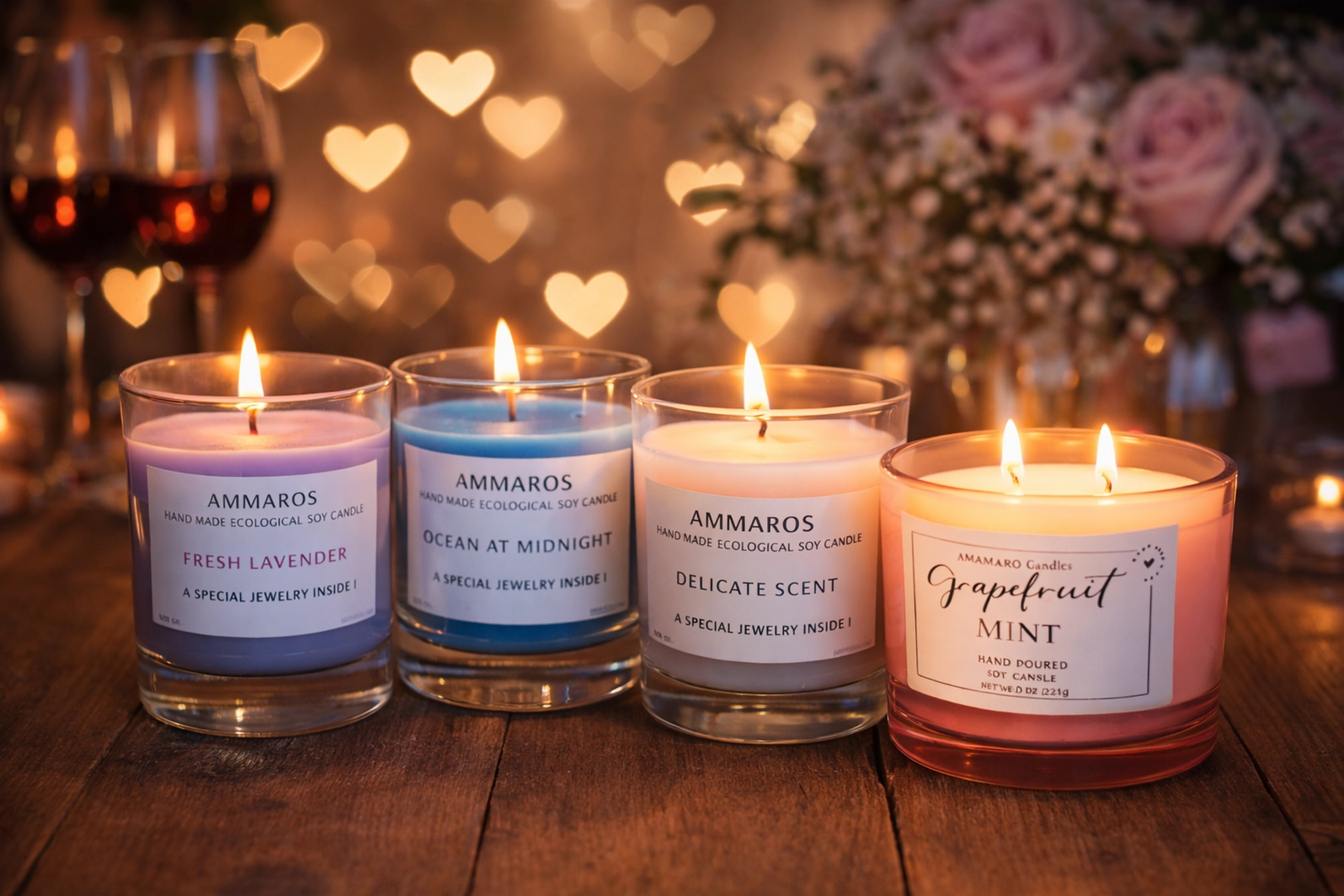
Luxury isn’t only what happens when the candle is burning. It begins the moment someone sees the jar, holds it, and notices small details that signal quality. A premium candle feels deliberate, not generic. The shape, weight, finish, labeling, and even the lid experience create a quiet message: this is made to be kept, displayed, and gifted.
In soy candles, you’ll often see luxury brands lean into refined minimalism: clean typography, balanced spacing, and a vessel that looks like it belongs on a coffee table even when unlit. But “minimal” doesn’t mean cheap. It means the materials and proportions do the talking.
The vessel: more than a container
The jar is one of the easiest ways to feel the difference between a standard candle and a luxury candle. Luxury vessels typically have a heavier base, smoother edges, and a finish that looks polished from every angle. The glass may be thicker, more uniform, and designed to tolerate heat without feeling fragile.
Many luxury soy candles also use vessels that can be reused—because luxury is partly about longevity and reducing the feeling of “disposable décor.” When a vessel looks good as a pen holder, a small planter, or a vanity jar, the candle feels like a lasting object, not a one-time burn.
Even small design choices matter. A lid that fits well, doesn’t rattle, and feels substantial can turn a simple candle into something that feels like a ritual: open, inhale, light, and set the mood.
The wax: “soy” is a category, not a guarantee
“Soy candle” can mean different things depending on the formula. Some soy candles are made with pure soy wax, while others use blends for performance reasons. Luxury in soy candles usually means the wax is chosen and tested for specific outcomes: smooth tops, stable burns, good scent diffusion, and a consistent melt pool across many batches.
What you’re often paying for in a luxury soy candle is refinement and repeatability. Higher-end makers invest in better process control: careful temperature management, longer cure times, and testing across different room conditions. The goal is not just “it smells nice,” but “it behaves well every time.”
Luxury also tends to avoid shortcuts that create messy experiences. A candle that constantly tunnels, soots, or sweats fragrance oil on hot days doesn’t feel premium—even if the scent is beautiful.
The wick: the hidden engineering behind a clean burn
A luxury candle burn feels calm. The flame is stable, the melt pool develops evenly, and the jar stays clean without heavy soot buildup. Achieving that is not luck—it’s wick engineering.
In soy candles, wick selection is especially important because soy wax and fragrance oils can change how fuel travels and how hot the flame becomes. Luxury makers often test multiple wick types and sizes for each jar and each fragrance profile. They’re looking for the sweet spot: strong but not overpowering scent, controlled flame height, minimal mushrooming, and a comfortable burn rate.
When wick choice is correct, the candle feels “effortless.” You light it, and it simply works. That reliability is one of the most underrated luxury traits.
Scent design: luxury is usually layered, not loud
A luxury fragrance rarely smells like a single note. Instead, it evolves. You may notice one impression right away, then a smoother “heart” emerges as the candle warms, and finally a soft base note that lingers in the room. This is sometimes described as depth, balance, or sophistication—words that can sound vague, but they point to a real difference in composition.
In a luxury soy candle, the scent experience is typically intentional in three ways: it is pleasant both cold and hot, it fills a room without feeling aggressive, and it avoids harsh, “burnt” or overly sweet edges as the burn continues.
Another luxury sign is how the fragrance behaves near the end of the candle. Lower-quality candles sometimes smell great at the start and then feel flat or distorted later. A premium candle aims for consistency from the first burn to the last.
Luxury also includes restraint. Strong throw is not always the goal. In many premium candles, the scent is designed to be “ambient”—present and elegant, not dominating the space.
Burn performance: luxury is predictability
If you had to pick one practical “luxury” marker that shows up across brands, it’s consistency. A luxury soy candle is expected to burn in a predictable way: steady flame, minimal soot, an even melt pool, and a jar that doesn’t become excessively hot when used responsibly.
That performance depends on testing. Many premium makers test for common household conditions: cooler rooms, warmer rooms, different humidity levels, different burn session lengths, and the way the candle behaves when it’s halfway finished versus nearly done. The point is to reduce surprises.
When a candle is truly luxurious, the user doesn’t need to “babysit” it. Basic care like trimming the wick still matters, but the candle feels forgiving and stable.
The finish: smooth tops, clean edges, and attention to detail
Visual perfection isn’t everything—but in luxury goods, it signals care. Luxury soy candles tend to look clean and considered: centered wicks, smooth wax surfaces, tidy labels, and consistent fill levels. Even if minor natural variations happen in soy, premium brands usually minimize them through process control.
Small details add up. A label applied straight. A wick that’s centered—not leaning. A jar rim that stays cleaner because the candle is wicked correctly. These are the “quiet” features people don’t always describe, but they feel immediately.
Packaging: luxury is protection plus presentation
Luxury packaging does two jobs at once: it protects the candle in shipping and it creates an experience when the box is opened. Premium candles are often purchased as gifts, so the unboxing matters. The packaging usually feels structured, sturdy, and clean—without looking overdone.
A strong luxury signal is when packaging seems “designed,” not just assembled. Materials feel deliberate, printing is crisp, and the overall impression aligns with the brand’s scent style—soft, modern, classic, bold, or artistic.
Even if someone never thinks about packaging again, they remember how it felt to open it. That memory is part of the luxury price.
Ethics, transparency, and ingredients: modern luxury expectations
Today, “luxury” often includes values—not just appearance. Many buyers expect premium brands to be clearer about what’s inside and how it’s made. In soy candles, that might include information about wax type, wick materials, fragrance practices, and care instructions that reflect real testing.
Transparency doesn’t have to be technical to feel premium. It just needs to feel honest and consistent. A luxury product tends to reduce uncertainty: you know what you’re buying, you know how to use it, and you trust the brand to stand behind it.
It’s also common for luxury brands to position themselves as more thoughtful about waste: reusable vessels, reduced plastics, or packaging designed to be recycled. Not every premium candle does this, but it is increasingly part of what customers associate with “high-end.”
Customer experience: the part people forget to measure
Luxury isn’t only the object—it’s the relationship around the object. Premium brands tend to offer clearer product descriptions, better burn instructions, and more consistent quality control. When something goes wrong, a luxury experience often includes a smoother resolution process.
This is one reason two candles with similar ingredients can feel very different in value. If one brand has tight batch consistency, reliable shipping, protective packaging, and helpful guidance, the buyer’s confidence increases. Confidence is a luxury feature.
Price vs luxury: what you’re really paying for
Higher price alone does not guarantee luxury, but true luxury usually costs more to produce. The premium is often paying for testing, better vessels, better packaging, more consistent production methods, more refined scent development, and fewer compromises in presentation.
In other words, luxury isn’t just “more.” It’s more intentional. A luxury soy candle is built to deliver a specific experience reliably, not just to exist as a scented wax product.
How to spot a luxury soy candle without falling for hype
If you want to evaluate luxury in a practical way, focus on signals that show real craftsmanship rather than just buzzwords. Look for a candle that feels substantial in the hand, has a clean finish, includes clear care guidance, and burns with a stable flame. Pay attention to how the scent behaves over time—does it feel smooth and layered, or is it loud at first and then disappears?
Luxury also shows up in the “after.” When the candle is done, do you feel like the vessel is worth keeping? Did the candle leave the jar mostly clean? Did the scent feel comforting rather than harsh? Those are the qualities that make people repurchase and gift a brand.
Most importantly, luxury should feel consistent. If the candle delivers a beautiful, reliable experience that matches the promise on the label, it’s doing what luxury is supposed to do—elevate a simple moment into something that feels curated.
Bottom line
A luxury soy candle is not defined by a single ingredient. It’s defined by the total experience: a well-designed vessel, refined scent development, controlled burn behavior, clean presentation, thoughtful packaging, and a brand that feels trustworthy. Luxury is the difference between a candle that merely smells good and a candle that feels like an atmosphere—polished, stable, and intentionally made.
If your goal is a premium home ritual or a gift that feels special, look for candles that show craftsmanship in the details. The “luxury” label should be something you can feel in the burn, not just read on the box.