Sustainability has become more than a marketing buzzword in the home-fragrance world. Candles may look simple, but every part of a candle has an environmental story: the wax source, the wick materials, the fragrance chemistry, the dyes, the container, the packaging, and the way the product is shipped. Soy candles are often presented as the “greener” choice, yet sustainability depends on details—not labels.
This guide breaks down what sustainability can realistically mean for soy candles and what to look for when you want a candle that aligns with lower-impact choices. The goal isn’t perfection; it’s informed tradeoffs. A genuinely responsible candle usually shows consistency across sourcing, transparency, safety, durability, and end-of-life considerations.
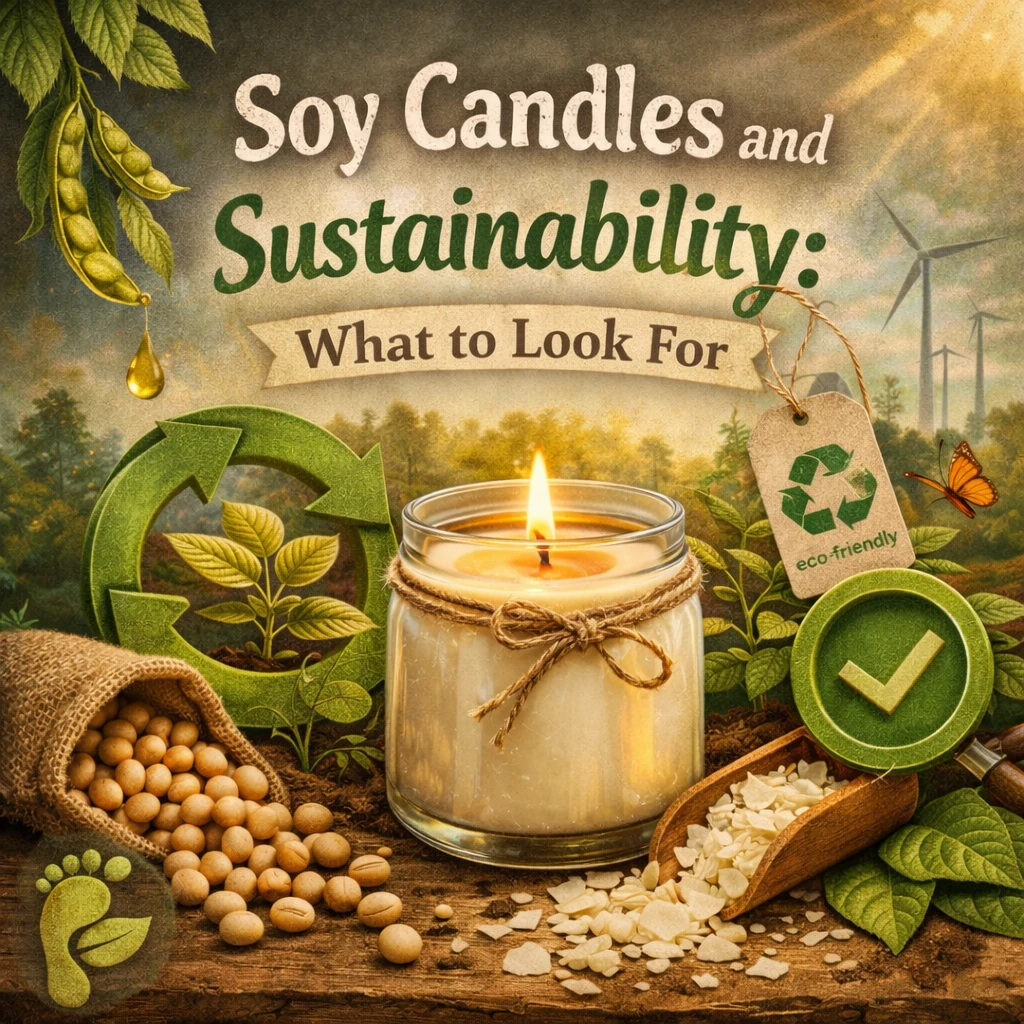
Start With the Wax: “Soy” Is a Category, Not a Guarantee
Soy wax is derived from soybean oil, and in many markets it’s valued for being plant-based and widely available. But “soy candle” can refer to very different formulas. Some candles use 100% soy wax; others are soy blends mixed with other vegetable waxes or paraffin to adjust scent throw, texture, or burn stability. From a sustainability standpoint, the most important questions are: what is the wax made from, where does it come from, and how is it processed?
Look for clear disclosure such as “100% soy wax” or “soy wax blend” with a list of what the blend contains. If a brand is serious about sustainability, it won’t hide the blend details behind vague phrases. Transparency is a sustainability signal because it enables accountability.
Also pay attention to how the brand talks about sourcing. Some suppliers offer soy wax that is traceable and, in certain cases, supports more responsible agricultural practices. While not every small maker can provide deep supply chain documentation, brands can still share their wax supplier region, whether the wax is hydrogenated, and whether they select waxes produced with stronger quality controls.
Sustainable Sourcing and Land Use: The Questions That Matter
When people think “sustainable soy,” they often worry about land conversion, habitat loss, and the agricultural footprint of large-scale crops. These issues are real in global commodity chains, but they are not identical everywhere and they aren’t solved by a single label. The best approach is to look for brands that acknowledge the complexity and explain what they do to reduce risk in their sourcing.
A more responsible candle brand may mention domestic/regional sourcing where possible, supplier traceability, or choosing wax inputs that come from supply chains with stronger sustainability commitments. If a brand claims “eco-friendly” without mentioning anything about sourcing, that’s a sign the sustainability story might be mostly branding.
It’s also helpful to remember that sustainability is multi-factor. Even if a wax is plant-based, a candle with excessive packaging, short burn life, or a container that can’t be reused can end up having a larger footprint than a well-designed alternative.
Wicks: Small Component, Big Impact on Clean Burning
The wick influences how efficiently a candle burns, how much soot it produces, and how stable the flame remains. From a sustainability perspective, a wick that promotes a cleaner, steadier burn reduces waste and reduces indoor particulate build-up. Common wick types include cotton, paper-cored, wood, and various specialty constructions.
What to look for:
Cotton wicks that are described as lead-free and made with minimal chemical treatment are generally a good sign. Many modern brands emphasize that their wicks contain no lead, but the more meaningful detail is whether the wick is engineered for the wax type and vessel size. A correctly sized wick can improve burn efficiency, reduce tunneling, and extend usable candle life—directly lowering how often you replace the product.
Wood wicks can be appealing and may provide a distinctive crackling effect. If you choose wood wicks, look for brands that mention responsible wood sourcing and proper testing. A poorly matched wood wick can struggle to stay lit or burn unevenly, which shortens candle life and increases waste.
Fragrance: Transparency, Safety, and Responsible Formulation
Fragrance is often the least transparent part of a candle because fragrance formulas can be proprietary. Still, sustainability-minded brands can share useful information without revealing trade secrets. Look for clear statements about whether the candle uses fragrance oils, essential oils, or a blend—and how the brand approaches safety.
Sustainability and health considerations overlap here. A candle that triggers headaches, irritates sensitive users, or fills a room with harsh soot is more likely to be underused or discarded. Responsible formulation includes careful dosing, selecting higher-quality fragrance materials, and testing for performance in the specific wax system.
Signs of a more thoughtful fragrance approach include:
Brands that mention compliance with recognized fragrance safety standards, disclose allergen information when relevant, and avoid extreme, overpowering fragrance loads. Sustainability is not only about “natural vs synthetic.” It’s about overall impact, performance, and responsible chemistry choices that reduce unnecessary emissions and waste.
Dyes and Additives: Minimalism Often Wins
Many soy candles are marketed as “clean” because they use fewer additives. While additives can sometimes improve stability, they can also complicate recyclability and increase formulation complexity. If you’re prioritizing sustainability, consider candles with minimal dyes and unnecessary decorative additives.
Dye-heavy candles can look striking, but colorants are rarely essential. A more sustainable approach often leans toward either undyed wax or subtle coloration, combined with high-quality fragrance and a well-tested wick rather than heavy modifications.
Containers: Reuse, Refill, and Real-World Recyclability
The container is one of the most visible sustainability decisions. Glass jars are common and can be reused, but sustainability depends on thickness, durability, and whether the consumer can realistically reuse or recycle it locally. Some containers have coatings, paints, labels, or mixed materials that complicate recycling.
What to look for:
Choose sturdy glass or metal containers that are designed to be reused. A good sustainability signal is when a brand encourages reuse and provides practical guidance for cleaning out leftover wax. Even better is a refill system where the container is kept and only the wax insert is replaced. Refills can reduce material use and often reduce shipping weight.
If a candle uses ceramic or specialty vessels, consider longevity. A durable vessel that becomes a cup, planter, or storage jar can be a positive, but only if it’s designed to be genuinely useful after the candle is finished.
Packaging: The Hidden Footprint
Packaging is where sustainability claims often fall apart. Even a well-sourced candle can lose credibility if it arrives inside layers of plastic, foam, glossy coatings, and oversized boxes. Sustainable packaging is right-sized, protective, and made from materials that are recyclable in practice—not just in theory.
Favor brands that use:
Recycled cardboard, minimal inks, paper-based cushioning, and plastic-free shipping where feasible. Look for statements about using recyclable or compostable materials, but also consider whether those materials are likely to be handled correctly by local waste systems. Practical recyclability matters more than perfect-sounding labels.
Burn Performance: Sustainability Includes How Long It Lasts
A candle that burns evenly and lasts longer is often more sustainable than one that tunnels, soots, or must be thrown out with half the wax unused. Longevity reduces replacement frequency, which reduces manufacturing and shipping impacts over time.
Brands that prioritize testing will often mention:
Proper wick sizing, burn-time estimates, and usage guidance. While burn time can vary by environment, a maker that has tested multiple wicks and adjusted for vessel diameter is more likely to deliver consistent performance. The most sustainable candle is the one you can actually use fully.
As a buyer, you can also support efficiency by following best practices: let the melt pool reach the edges on early burns, trim the wick, and avoid drafts. These habits reduce soot and help the candle last.
Indoor Air Considerations: Clean Burning Is Part of Responsible Design
Sustainability is often framed around the environment, but indoor air quality matters too. A candle that produces visible soot is wasting fuel and depositing particles on surfaces. Clean burning depends on wax quality, wick choice, fragrance chemistry, and user practices.
Look for cues that a brand tests for soot reduction and stable flame behavior. Also consider whether the fragrance is described as balanced rather than aggressively intense. Extremely high fragrance loads can sometimes compromise burn stability, especially in certain waxes.
Ethics and Operations: A Sustainable Product Comes From a Sustainable Business
Sustainability is not only a materials checklist. It’s also the way a business operates. Responsible brands often show consistency in labor practices, supplier relationships, and production methods. This can be hard to measure from the outside, but you can look for signals of authenticity.
Positive signals include:
Clear and consistent policies, honest descriptions of tradeoffs, willingness to answer questions, and avoidance of exaggerated claims. If every product is described as “non-toxic,” “zero impact,” or “completely eco-safe” without detail, that’s often a marketing shortcut. Real sustainability communication is usually more specific and more nuanced.
Certifications and Claims: How to Read Labels Without Getting Tricked
Certifications can be helpful, but they can also be confusing. Some labels apply to a specific ingredient, not the whole candle. Others might be self-created badges that look official. A sustainable buyer should treat claims as starting points and look for supporting detail.
A credible claim is typically:
Specific, limited in scope, and paired with an explanation. For example, “recycled-content box,” “plastic-free shipping,” “refill program,” “lead-free cotton wick,” or “locally poured in small batches” are claims that can be understood and verified. Broad claims like “eco-friendly,” “clean,” or “green” are less meaningful unless they are backed by information about wax, wicks, fragrance approach, packaging, and end-of-life reuse.
Refills and Circularity: The Best Sustainability Upgrade
If you want a practical, high-impact sustainability improvement, prioritize candles that support reuse and refills. A refill model keeps the container in circulation and reduces repeated production of heavy glass or ceramic. Even if the refill is wrapped for protection, the overall material footprint can be lower than buying a brand-new jar each time.
Some brands also offer container return programs or incentives for reusing jars. These programs are not perfect, but they show that the company is thinking beyond the sale and designing for the product’s full life cycle.
Shipping and Local Purchasing: Distance Matters More Than You Think
Candles are heavy and fragile, which means shipping can be a significant part of their footprint. Buying locally—when the product quality and practices align with your values—can reduce transport emissions and packaging needs. Even within e-commerce, brands that ship from closer fulfillment points or use right-sized packaging can lower impacts.
If you regularly buy candles, consider fewer, better purchases: a larger candle that burns cleanly and lasts long, or a refill system that reduces repeated shipping of containers.
Practical Checklist: What to Look For When Comparing Soy Candles
When you’re shopping, sustainability is easiest when you evaluate candles consistently. Here are practical signals that usually indicate a more responsible product:
Look for clear wax disclosure rather than vague “soy-based” wording. Favor minimal additives and straightforward formulas. Choose lead-free cotton or responsibly sourced wood wicks that are tested for the vessel size. Prefer brands that explain their fragrance approach and avoid exaggerated safety claims. Select reusable containers and, ideally, refills. Prioritize minimal, recyclable packaging with right-sized shipping. Consider burn performance as part of sustainability, because a candle that tunnels or soots creates more waste. Finally, trust brands that communicate specifics, answer questions, and acknowledge tradeoffs.
What Sustainability Can Realistically Mean in Home Fragrance
The most sustainable candle is rarely the one with the loudest claims. It’s the one that is designed thoughtfully, performs well, lasts, and leaves behind a container you can reuse—without requiring you to decode vague marketing language. Soy candles can be part of a more responsible home-fragrance routine, but only when the full product system is considered: sourcing, formulation, packaging, shipping, use, and end-of-life.
If you want a simple “best move,” focus on transparency and longevity. Buy from brands that explain what they use and why, and choose candles that burn cleanly and completely. Sustainability is built from many small choices—and the good news is that candles give you plenty of opportunities to choose better without sacrificing comfort or atmosphere.