
Soot is the part nobody wants to talk about when shopping for candles. It shows up as a gray film on glass, a faint haze on walls, or a dark “mushroom” at the tip of the wick. Then come the big questions: is soot normal, is it avoidable, and do soy candles actually make less of it?
The honest answer is this: soy candles often produce less visible soot than many paraffin candles, but “soy” alone is not a magic word. The amount of soot depends on how cleanly the candle burns, and that comes down to a mix of wax, wick, fragrance, dye, jar shape, and—most importantly—how the candle is used.
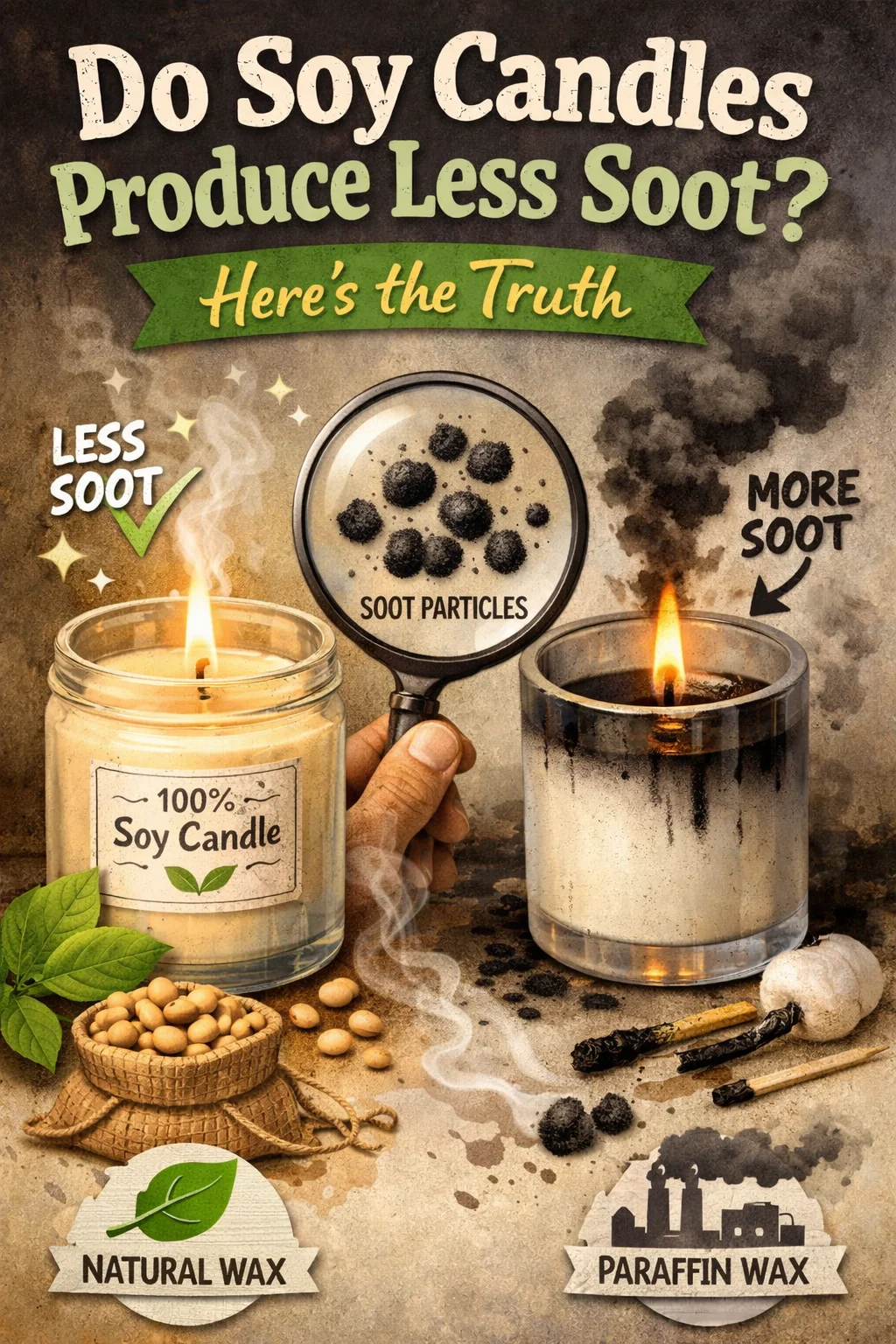
What Soot Actually Is (and Why It Happens)
Candle soot is made of tiny carbon particles released when the flame doesn’t burn fuel completely. A candle flame is basically a small combustion system: wax melts, travels up the wick, turns into vapor, and then burns in oxygen. When everything is balanced, the burn is relatively clean. When something disrupts that balance—too much fuel, not enough oxygen, drafts, an oversized wick, heavy fragrance load— the flame can smoke and carbon particles escape into the air.
It helps to think of soot as a symptom, not a “type of wax” problem. Wax can influence how easily a candle burns cleanly, but soot is ultimately about combustion conditions. That’s why two candles labeled “soy” can behave totally differently in real life.
Do Soy Candles Typically Produce Less Soot?
In many everyday situations, soy candles tend to produce less visible soot than traditional paraffin candles. This is often attributed to the way soy wax burns and the way many soy candles are formulated—especially when paired with properly sized wicks and moderate fragrance levels. However, “less soot” is not guaranteed in every case.
A soy candle can still smoke if the wick is too large, the wick is not trimmed, the candle is in a drafty spot, or the fragrance blend is heavy and doesn’t combust smoothly. On the other hand, a well-engineered paraffin candle can burn quite cleanly under ideal conditions. The difference is often about how forgiving the system is: soy candles frequently perform cleaner for many users, but the design and burn habits still decide the outcome.
Why Some Candles Soot More Than Others
If you want the “truth” about soot, you have to look beyond the wax label. These are the most common reasons any candle—soy included—can produce more soot:
Wick size and wick type
The wick is the engine. If it’s too large for the jar diameter or wax blend, it can pull up more fuel than the flame can fully burn. That leads to a taller flame, more flicker, and more smoke. Different wick materials also affect burn behavior. Cotton, wood, and various coreless designs can each behave differently depending on wax and fragrance.
Fragrance load and fragrance chemistry
Fragrance oils are complex. Some scent blends burn cleanly and others are heavier and can contribute to smoking if the wick and wax aren’t tuned for them. A candle can be “soy” and still soot if it’s over-fragranced or if the scent blend needs a different wick size to burn well.
Dyes and additives
Dyes and certain additives can change how a candle melts and vaporizes. More ingredients can mean more variables. That doesn’t mean dyed candles are “bad,” but it does mean the formula needs good engineering. A clean, simple blend is often easier to burn cleanly than a highly modified one.
Drafts, fans, AC vents, and open windows
Air movement disrupts the flame. A flickering flame is a less efficient flame, and inefficient combustion can create soot. Even a small draft you barely notice can make a candle smoke, especially if it’s already running hot from an oversized wick.
Burn time and “power-burning”
Candles are not meant to be burned indefinitely. Burning too long can overheat the vessel, make the wax pool deeper than intended, and encourage a larger flame. On the flip side, burning too short repeatedly can cause tunneling, which can also lead to uneven heat and inconsistent combustion later.
Dirty wick habits
A long wick, a bent wick, or leftover char at the tip can create a smoky flame. This is one of the easiest issues to fix, and it’s a major reason people see soot even with “clean burn” wax types.
The Wick “Mushroom” and What It’s Telling You
That little dark bulb at the tip of the wick—often called mushrooming—is basically built-up carbon. It can happen in many candles, but it’s especially common when the candle is burning too hot or the wick is not trimmed. Mushrooming doesn’t automatically mean the candle is unsafe, but it is a sign that the burn may not be as clean as it could be.
If mushrooming is frequent and heavy, it often points to one of these issues: wick is too large, candle is in a draft, burn sessions are too long, or fragrance is heavy for the chosen wick. Correcting the burn environment and trimming usually improves it quickly.
How to Burn Soy Candles With Minimal Soot
If you want the cleanest experience possible, the good news is that soot reduction is often more about simple habits than complicated rules. These practical steps work for soy candles and most other candle types:
Trim the wick before each burn
A shorter wick helps the flame stay stable and efficient. Trim to a small, neat length before lighting, especially if the wick has a dark tip from a previous burn. This is one of the most effective soot-reduction steps you can take.
Keep it away from drafts
Place the candle away from open windows, fans, and AC vents. A steady flame is a cleaner flame. If you see the flame leaning or flickering, your candle is likely not in an ideal spot.
Avoid burning for extremely long sessions
Long burns can overheat the wax pool and push the flame into a hotter, smokier range. Reasonable burn sessions help keep the system in its best combustion zone and protect the jar too.
Let the wax pool reach the edges (when appropriate)
Many jar candles perform best when the melt pool spreads evenly. This helps prevent tunneling and encourages consistent heat. Uneven burn patterns can lead to unpredictable flame behavior later.
If the flame is too tall, put it out and reset
A tall, dancing flame is more likely to smoke. Extinguish the candle safely, let it cool, trim the wick, and relight later. This simple reset often stops soot issues immediately.
What About “Clean Burn” Claims?
“Clean burn” is a popular phrase, but it can mean different things depending on who’s saying it. Some brands use it to describe wax type. Others use it to highlight low visible soot under typical use. The reality is that no candle burns with zero emissions in every situation, because any flame is a combustion source.
A more helpful way to evaluate a candle is to look at the burn behavior. Does the flame stay steady? Does the jar stay relatively clean? Is the wick mushrooming constantly? Does smoke appear when you extinguish it? These practical signs often tell you more than a label.
How to Tell If Your Soy Candle Is Sooting Too Much
A small amount of darkening near the rim of a jar can happen over time, especially with heavily scented candles. But excessive soot usually shows up clearly. Watch for repeated signs like these:
Frequent visible smoke while the candle is burning, rapid blackening of the jar, a consistently tall flame, heavy wick mushrooming, or a noticeable smoky odor that lingers in the room. If you see these signs, it’s worth adjusting burn habits first—trim the wick and eliminate drafts—before assuming the candle itself is the problem.
Soy vs Paraffin vs Blends: The Real-World Takeaway
Comparing wax types can be useful, but in real homes the difference often comes down to design and usage. Many soy candles are made with a focus on smoother, steadier burning and are frequently paired with wicks that aim for a calmer flame. That combination can reduce the chance of visible soot for many people.
Blended waxes also exist, and some are engineered specifically to improve scent throw, appearance, or burn stability. A well-designed blend can burn cleanly. A poorly matched wick in a pure soy candle can still smoke. If you’re choosing based on soot alone, focus on overall craftsmanship and burn behavior rather than assuming any single wax type is automatically perfect.
Quick Soot-Reduction Checklist
If you want the benefits of a soy candle with minimal soot, keep these simple habits in mind:
- Trim the wick before lighting, especially after a previous burn.
- Burn in a calm area away from fans, vents, and open windows.
- Keep burn sessions reasonable and avoid overheating the jar.
- Extinguish and reset if the flame becomes tall, smoky, or unstable.
- Choose well-made candles with quality wicks and balanced fragrance.
Bottom Line: Do Soy Candles Produce Less Soot?
Soy candles often produce less visible soot than many conventional paraffin candles, especially when they’re well-made and burned correctly. But soot isn’t determined by wax type alone. The wick, fragrance, airflow, and burn habits have a huge influence on how clean a candle will actually perform in your space.
If you’ve tried soy candles and still noticed soot, don’t write them off immediately. Most soot issues can be reduced dramatically with proper wick trimming and a draft-free setup. When the candle is designed well and used well, soy can deliver the cleaner-looking burn many people are hoping for—without the constant blackening that makes candle lovers lose patience.