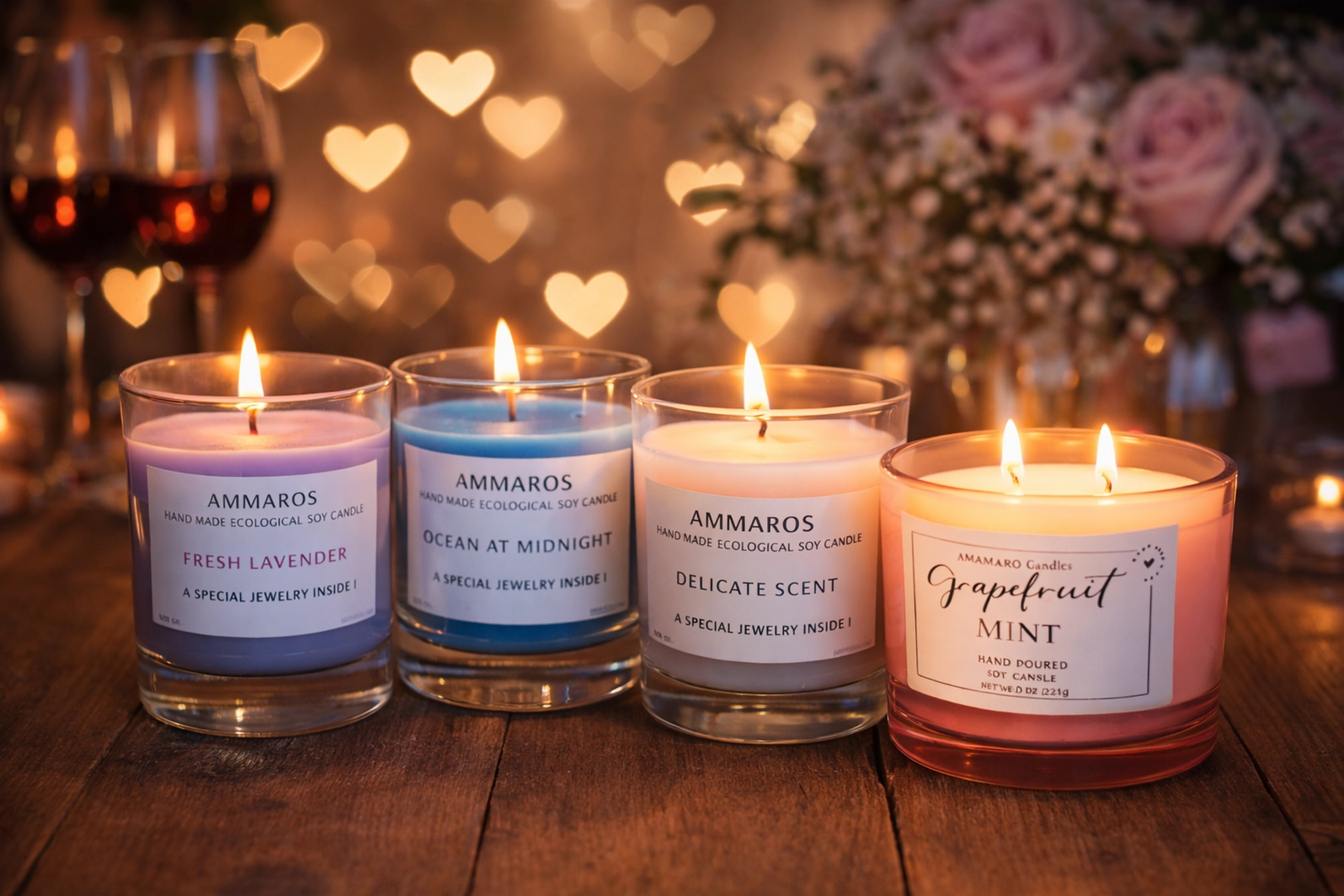
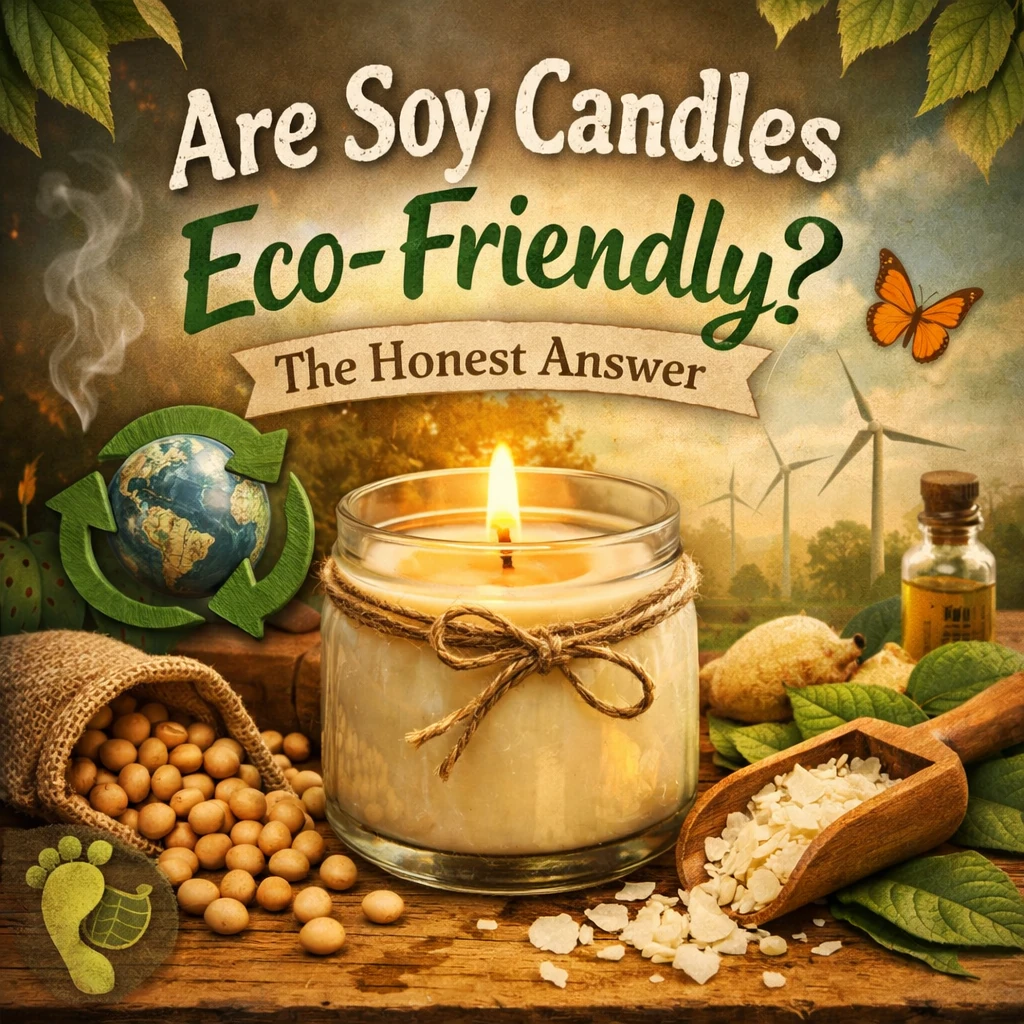
“Eco-friendly” is one of the most common labels in the candle world, and soy candles are often placed at the top of that list. But the honest answer is more nuanced than a simple yes or no. A soy candle can be a better choice than many alternatives, yet it can also carry environmental tradeoffs depending on where the soy is grown, how it’s processed, what’s blended into the wax, and what else is inside the candle—from fragrance materials to dyes, wicks, and packaging.
This article breaks down what “eco-friendly” really means for candles, where soy tends to perform well, where it can fall short, and what practical signals to look for if you want a candle that’s genuinely lower-impact.
What “Eco-Friendly” Means in Candle Terms
A candle’s environmental footprint isn’t determined by wax alone. A more honest evaluation looks at multiple factors: the source of the wax, land use and farming inputs, how the wax is refined, shipping distance, burn efficiency, indoor air impacts, and end-of-life waste like jars, labels, and lids. “Eco-friendly” should mean lower overall harm across the product’s lifecycle, not just a single ingredient that sounds green.
In practice, a candle that claims to be eco-friendly should ideally be made from renewable feedstocks, avoid unnecessary additives, burn cleanly, use responsible packaging, and come from a supply chain that can be traced and verified. Soy can support that goal, but it doesn’t guarantee it automatically.
Why Soy Is Often Considered a Better Wax
Soy wax is derived from soybean oil, which comes from a plant-based, renewable resource. Compared with paraffin (a petroleum byproduct), soy generally starts with a “less fossil” origin story. That alone is a meaningful difference: paraffin’s supply chain is tied to oil extraction and refining, while soy can be produced within agricultural systems.
Many people also choose soy because it often burns more slowly than paraffin blends. A slower burn can mean fewer candles used over time for the same number of cozy evenings, which can reduce total material consumption. In addition, soy is commonly described as producing less soot when formulated and wicked correctly—an important point because visible soot is both a cleanliness issue and a signal that the burn is not as efficient as it could be.
Another practical advantage is that soy wax is typically easier to clean up with soap and water compared with petroleum-based waxes. While cleanup isn’t the core definition of eco-friendly, products that are easier to handle and reuse can indirectly support less waste.
The Hard Truth: Soy Isn’t Automatically “Green”
The biggest honest caveat is agriculture. Soybeans require land, and land use matters more than most candle buyers realize. In some regions, soy cultivation has been linked to habitat loss and pressure on ecosystems. Even if the soy used in wax is not the main driver in a specific area, the broader market and supply chain can still be connected to deforestation risk and biodiversity impacts.
Farming inputs also matter. Large-scale agriculture can involve fertilizers, pesticides, and fuel-intensive equipment. These inputs contribute to greenhouse gas emissions and can affect soil and water quality. Some farms use better practices than others, but unless a supply chain is transparent, it’s hard to know where a given wax batch sits on that spectrum.
On top of farming, there is processing. Turning soybean oil into a candle wax typically involves hydrogenation and refining steps. Processing is normal for many materials, but it does mean energy use, industrial chemicals, and transport within the supply chain. “Plant-based” doesn’t automatically mean “low impact” once you account for everything required to make a stable, consistent wax.
Soy vs Paraffin: A Practical Environmental Comparison
Paraffin is derived from petroleum. That gives it a non-renewable foundation and ties it to fossil fuel extraction and refining. From a climate and resource-renewability perspective, that’s a real drawback. Soy, in contrast, is renewable in the sense that it can be grown again, but it relies on land and agricultural inputs.
On burn behavior, a well-made candle in either wax can burn cleanly, but paraffin products are more likely to be heavily scented, dyed, or formulated for strong scent throw at lower cost. That doesn’t mean “paraffin is dirty” and “soy is clean” in every case. It means you should judge the full formulation and manufacturing quality, not only the base wax.
The honest takeaway is that soy can be a better default than paraffin when you want a more renewable input and potentially lower soot, but the environmental “win” depends heavily on how the soy was sourced and what else is in the candle.
Soy vs Beeswax and Coconut Wax: Not All “Natural” Waxes Are Equal
Beeswax is often described as a premium natural wax, but it’s limited by supply and tied to beekeeping practices. Responsible beekeeping can support local ecosystems, yet the market also includes questionable practices and long transport routes. It’s not automatically a perfect eco-choice, and it tends to be more expensive, which changes how people use it.
Coconut wax is another popular option, often praised for smooth performance and good scent throw. Environmentally, it depends on coconut farming practices and how far the product travels. Coconut is frequently grown far from where many candles are consumed, which can add transport emissions. Like soy, the farming system is the real story, not the marketing label.
In real life, most “eco” candles use blends to balance burn performance, scent throw, stability, and cost. Blends can be fine, but they reduce transparency. If a candle says “soy blend,” it may include other waxes that shift the environmental profile.
The “Soy Blend” Problem: When Labels Hide the Real Ingredients
One of the most common consumer traps is the phrase “soy blend.” It sounds reassuring, but it can mean almost anything. A candle might contain mostly soy with a small amount of another wax for stability. Or it might contain a small amount of soy mixed into a cheaper base. Without percentages or a clear ingredient statement, you can’t assume the candle is “mostly soy.”
Blends aren’t automatically bad. Many candle makers blend waxes to achieve a safer melt pool, reduce frosting, improve hot throw, and enhance glass adhesion. The issue is transparency. If your goal is environmental improvement, you should prefer candles that clearly state what the wax is and what else is included.
A simple rule of thumb is that the more vague the label, the more cautious you should be about the eco-claims. If a brand can clearly describe the wax, wick materials, and fragrance approach, it’s usually a sign they take formulation seriously.
Wicks Matter More Than Most People Think
The wick influences how completely the candle burns. Poor wick sizing can lead to tunneling, soot, smoking, or wasted wax on the jar walls. Even an “eco” wax becomes less eco-friendly if the candle performs badly and gets tossed early. A well-designed wick helps the candle burn efficiently, reduces visible soot, and improves the overall experience so you actually finish the candle.
Many modern candles use cotton wicks, paper-core wicks, or wood wicks. Each has tradeoffs in burn behavior and sourcing. The most eco-relevant point is consistency and performance: a wick that burns cleanly and steadily reduces waste. If a candle claims to be “clean burning” but routinely smokes, the issue is likely the wick, the fragrance load, or the container design.
If you’re shopping intentionally, look for brands that talk about wick testing and safe burn design. Quiet details about testing are often more meaningful than loud green claims.
Fragrance and Dyes: The Hidden Environmental Footprint
The fragrance component can be a significant part of a candle’s environmental and health profile. Fragrance oils and essential oils are complex mixtures. Some are derived from petrochemicals, some from plants, and many are blends. “Natural fragrance” isn’t automatically safer or more eco-friendly; plant extraction can be resource-intensive, and rare botanicals can raise sustainability concerns.
Dyes are similar. A small amount of dye may not dominate a candle’s footprint, but heavily dyed products can introduce unnecessary additives. Many “eco” candle buyers prefer minimal or no dye, partly for aesthetics and partly to reduce ingredients that don’t improve function.
The honest approach is to choose products with straightforward formulations: moderate fragrance loads, clear ingredient descriptions, and a focus on burn performance. Less complication often means fewer unintended tradeoffs.
Packaging and Containers: The Part People Forget
A candle’s jar and packaging can be as impactful as the wax choice, especially when candles are bought frequently. Thick glass, heavy lids, decorative boxes, plastic wraps, foam inserts, and glossy coatings all add material, energy, and transport weight. If a candle comes in a beautiful “gift presentation” every time, that might be aesthetically pleasing, but it can be environmentally costly.
Reuse is where containers can shine. A durable glass jar that you actually reuse can reduce waste dramatically compared with disposable packaging. The problem is that many jars look reusable but end up sitting in a cabinet, then eventually go to recycling—or worse, the trash. Eco-friendly outcomes depend on real behavior, not just theoretical recyclability.
If you want a lower-impact candle habit, prefer minimal packaging and containers that have a clear second life. Even better, look for refill programs, local pickup options, or bulk packaging for repeat purchases.
Clean Burning: Eco-Friendly Also Means “Not Wasting Wax”
A candle that tunnels badly is a waste problem. If half the wax remains trapped on the sides of the container, the candle consumed resources but didn’t deliver its full use. Efficient burn design is one of the most practical forms of sustainability: better performance means fewer candles needed over time.
Burn performance is affected by wax type, wick size, fragrance load, jar diameter, airflow, and user behavior. Trimming the wick, keeping the candle away from drafts, and letting it burn long enough to reach a full melt pool can reduce tunneling. These are small actions, but they directly influence waste reduction.
An eco-friendly candle is not only about ingredients—it’s also about whether the candle is engineered and used in a way that avoids unnecessary waste.
So… Are Soy Candles Eco-Friendly?
The honest answer is: sometimes, and often more eco-friendly than common alternatives, but it depends. Soy wax can be a good step away from petroleum-based candles, and it can support a cleaner, slower burn when properly formulated. However, soy agriculture, processing, blended formulas, and opaque labeling can reduce or even cancel out those benefits.
If you’re choosing soy for environmental reasons, treat “soy” as a starting point, not a guarantee. The full picture includes sourcing, formulation quality, packaging, and real-world use.
What to Look For If You Want a Truly Lower-Impact Soy Candle
If you want to buy more responsibly without turning candle shopping into a research project, focus on signals that correlate with better outcomes: transparency, tested performance, and reduced waste.
Clear wax statements. Prefer candles that say “100% soy wax” or clearly explain what the blend contains. Vague “natural wax blend” claims are not very informative.
Good burn behavior. Look for brands that talk about wick testing, safe burn design, and realistic burn time expectations. A clean, steady candle reduces waste and improves indoor experience.
Thoughtful fragrance approach. Moderate scent loads, clear descriptions, and fewer unnecessary additives often correlate with better performance and fewer surprises.
Minimal packaging or refill options. Reduced packaging weight, recyclable materials, and refill programs can matter as much as wax choice over repeated purchases.
Local or regional production when possible. Shorter shipping distances often reduce transport emissions and may make supply chain questions easier to answer. While “local” isn’t perfect by default, it can simplify traceability.
How to Make Any Candle More Eco-Friendly Once You Own It
Even the most responsible candle still uses resources, so the most eco-friendly candle is often the one you use fully and thoughtfully. Small habits can reduce waste and improve burn quality.
Burn it long enough to avoid tunneling. On early burns, allow the melt pool to reach close to the container edges when safe to do so.
Trim the wick. A properly trimmed wick can reduce smoking and soot, improving burn efficiency.
Avoid drafts. Airflow can cause uneven burn and wasted wax.
Reuse or recycle the container responsibly. Many jars can be repurposed for storage, planters, or desk organization. If recycling, clean wax residue as best as you can.
A Balanced Bottom Line
Soy candles can be part of a more eco-conscious lifestyle, especially when they replace petroleum-based options and are made with transparent sourcing, clean burn design, and minimal waste packaging. But soy is not a magic ingredient. The environmental story depends on responsible agriculture, honest labeling, and real-world performance.
If you want the most honest way to shop, don’t stop at the word “soy.” Look for clarity, quality, and reduced waste. That’s where eco-friendly choices become more than marketing—and where your candle habit can genuinely be lower impact.