Soy candles have become a staple in modern homes, boutique shops, spas, and even corporate gifting. They’re often marketed as “cleaner,” “safer,” and most famously, as candles that burn longer than traditional paraffin options. If you’ve ever shopped for candles online, you’ve likely seen bold claims suggesting soy wax will outlast everything else by default. But does it really?
The truth is more interesting than the marketing. Soy candles can burn longer, and in many cases they do—but not because soy is magically superior in every situation. Burn time depends on a whole ecosystem of variables: wax formulation, wick type, jar shape, fragrance load, dye, airflow, and even how you personally use the candle. This article separates the myth from reality and gives you a practical understanding of what actually affects burn time, so you can make better choices—whether you’re a candle buyer, a home user, or someone thinking about starting a candle business.
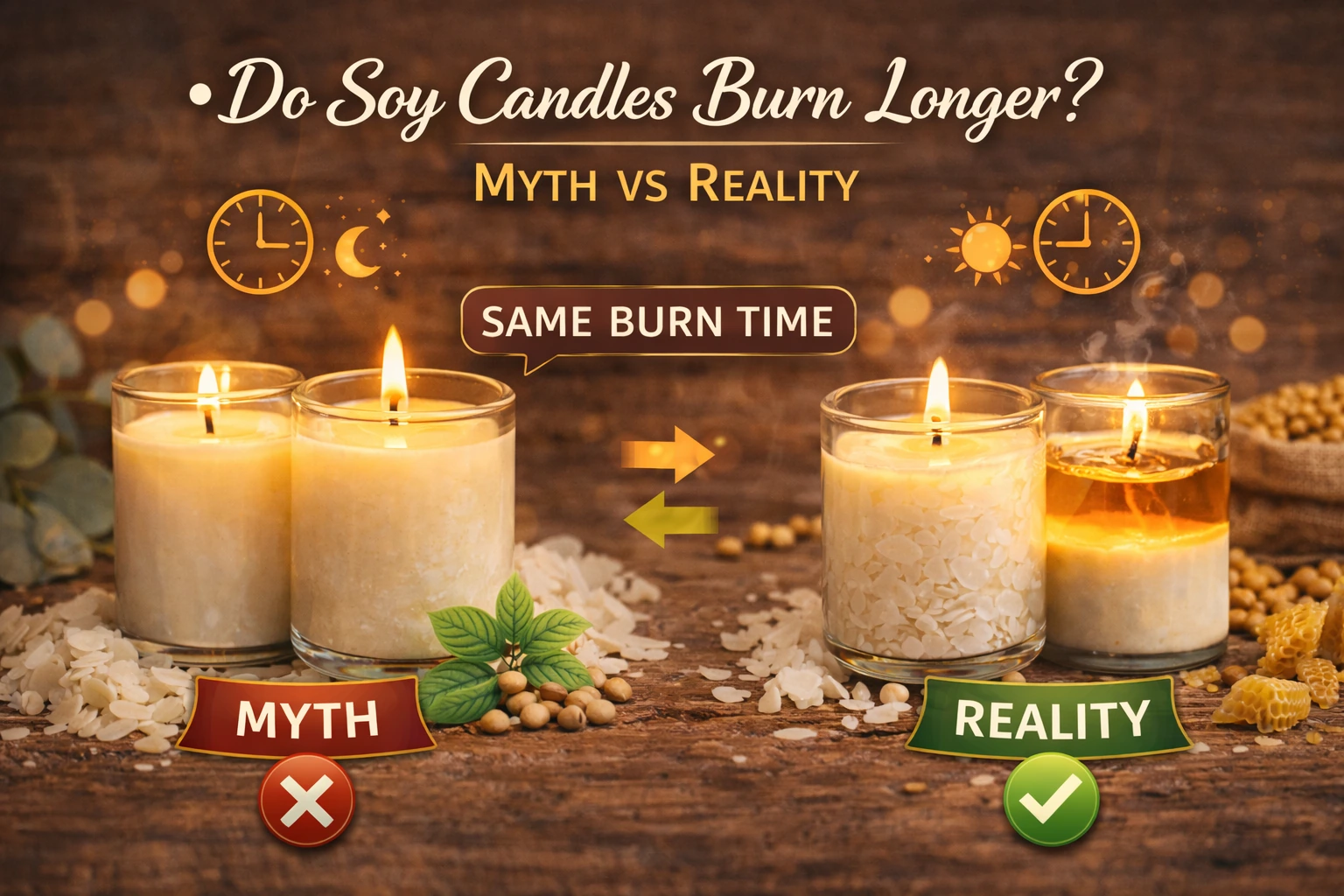
The Short Answer: Soy Can Burn Longer, But It’s Not Guaranteed
Many soy candles burn longer than paraffin candles of the same size, but that’s not a universal law. Soy wax generally burns at a lower temperature than paraffin, which often results in slower consumption of wax. That slower melt and burn behavior can translate to more total hours of use. However, the real-world difference can be small—or soy can even burn shorter—if the candle is poorly wicked, overloaded with fragrance, or housed in a jar that encourages fast melting.
In other words, the claim “soy always burns longer” is a simplified statement that can be true in controlled comparisons, but breaks down in real consumer conditions.
Why People Believe the Burn-Time Myth
The idea that soy candles burn longer became popular for a few reasons. First, early soy blends often performed well in container candles when compared with many budget paraffin candles. Second, soy was marketed as a premium alternative, and “longer-lasting” is a powerful selling point. Third, soy candles are frequently sold in jars with thicker glass and better lids, which can reduce contamination and help preserve fragrance and appearance over time. These product choices can indirectly create a perception of better longevity.
But the biggest driver is simple: shoppers want an easy rule. Nobody wants a chemistry lesson when buying a candle. “Soy burns longer” is a convenient, memorable phrase—even if it skips the details.
How Burn Time Actually Works: The Candle’s “Fuel System”
A candle is basically a controlled fuel delivery system. The wax is the fuel, the wick is the engine, and heat is the mechanism that converts solid fuel into vapor for combustion. The flame doesn’t burn solid wax—it burns wax vaporized near the wick. That means the burn time is impacted by how efficiently the candle produces melt pool wax and how quickly the wick consumes it.
If a candle runs too hot, it melts too much wax too quickly, creating a larger melt pool and increasing fuel consumption. If it runs too cool, it may tunnel and waste wax along the sides of the container, reducing the usable portion of the candle. The ideal burn is balanced: clean flame, stable melt pool, minimal smoke, and efficient fuel usage.
Soy vs Paraffin vs Blends: What the Wax Type Changes
Wax choice affects burn rate, but wax type is only one part of the story. Still, it matters, so let’s break down the common types in a realistic way.
Soy wax typically melts at a lower temperature than many paraffin waxes. This lower melt point can result in a gentler burn and slower wax consumption, especially in container candles. Soy can also hold fragrance differently, sometimes requiring formulation adjustments to ensure hot throw performs well without “overloading” the wax.
Paraffin wax is widely used because it’s consistent, easy to work with, and often provides strong scent throw. It can burn hotter depending on the formulation, and it can produce a more aggressive melt pool if paired with a high-performing wick. In budget candles, paraffin is sometimes used with minimal quality control, which can produce soot or shorter burn times due to wick and fragrance choices.
Blended waxes are extremely common today. Many “soy candles” on the market are not 100% soy—some include small amounts of paraffin, coconut wax, palm wax, beeswax, or proprietary additives. These blends can improve scent throw, reduce frosting, stabilize burn behavior, and increase consumer appeal. In many cases, a well-designed blend can outperform a pure soy candle in both burn time and overall quality.
So the myth starts to crack right here: not all soy candles are pure soy, and not all paraffin candles are low-quality. The performance differences depend on the formula and build, not the label alone.
The Wick Matters More Than Most People Realize
If wax is the fuel, the wick is the throttle. Two candles made with identical wax can burn completely differently depending on wick selection. Wick type, thickness, material, and treatment all influence flame height, melt pool diameter, and fuel draw rate.
A wick that’s too large will generate a bigger flame, burn hotter, melt more wax, and reduce burn time. It might also create soot and smoke, especially if the candle is fragranced heavily. A wick that’s too small may tunnel, wasting wax and reducing the practical usable hours because the candle can’t evenly melt the surface.
Soy candles are sometimes wicked differently than paraffin candles because soy behaves differently as it melts and cools. A good soy candle requires careful tuning to avoid tunneling while still maintaining an efficient burn. This is why two soy candles can have opposite performance experiences depending on how well the wick matches the jar and formula.
Container Shape and Diameter Can Decide the Winner
Candle jars aren’t just decoration—they influence heat retention and airflow. A wide jar allows a larger melt pool and often burns faster because more wax becomes liquid and available to the flame. A narrow jar may restrict airflow, reduce melt pool spread, and increase the risk of tunneling if the wick is not tuned properly.
Many soy candles are sold in mid-width jars that encourage a stable melt pool and steady burn rate. But if you compare a wide paraffin jar candle to a narrower soy jar candle, soy may “win” simply because the jar design slowed the burn. Swap the jar sizes and you can change the result.
This is why burn-time comparisons should be made between candles with the same diameter, the same wax weight, and similar wick types. Otherwise, it’s not a fair test—it’s a design comparison disguised as a wax comparison.
Fragrance Oils and Dyes Can Reduce Burn Time
A candle with a heavy fragrance load may burn differently than one with minimal scent. Fragrance oil can alter how wax melts and how the wick behaves. Some fragrance oils increase the likelihood of soot or mushrooming at the tip of the wick, which can make the flame bigger and consume wax faster.
Dyes can also slightly affect burn behavior, especially in candles with intense coloration. While the impact is not always dramatic, the more additives included, the more the candle’s performance depends on precise formulation.
Many shoppers compare a strongly scented soy candle from one brand with a lightly scented paraffin candle from another. If the soy candle burns faster, they assume soy is worse. If the soy candle burns longer, they assume soy is better. The truth is that fragrance level can be the hidden factor behind both outcomes.
How You Burn the Candle Changes Everything
Even a perfectly engineered candle can burn poorly if used incorrectly. Burn habits have a major effect on total usable life.
If you light a candle for only 20–30 minutes at a time, it often won’t develop a full melt pool across the surface. This leads to tunneling, leaving wasted wax on the sides. That wasted wax reduces the effective burn time because the candle becomes too deep for the flame to properly use remaining wax.
On the other hand, burning a candle for an extremely long time can overheat the jar, create an excessive melt pool, and increase fuel consumption. It can also cause the wick to burn too aggressively, reducing efficiency and potentially producing soot.
A balanced routine—long enough to form a full melt pool but not so long that it overheats—usually produces the best longevity, regardless of wax type.
So… Do Soy Candles Burn Longer in Real Life?
In many normal consumer situations, soy candles often burn longer than paraffin candles of similar size and quality. The lower melt point and gentler burn behavior can translate into more hours per ounce of wax. But “often” is not “always.”
A premium paraffin candle with excellent wick engineering can last longer than a poorly made soy candle. A blended wax candle can outperform both. And a candle with the wrong wick for its jar can waste wax regardless of material, cutting practical burn time dramatically.
This is why the best answer is not “soy vs paraffin,” but “candle design and quality vs candle design and quality.”
Myth vs Reality: Common Claims Explained
Myth: Soy always burns longer than paraffin.
Reality: Soy can burn longer, but the wick, jar, additives, and burn habits often decide the outcome more than wax type.
Myth: If a candle burns fast, the wax must be “bad.”
Reality: Fast burn can be caused by wick oversizing, wide containers, strong fragrance oils, or high room airflow.
Myth: “100% soy” automatically means high quality.
Reality: A candle can be 100% soy and still be poorly wicked, tunneling, smoking, or underperforming in scent and longevity.
Myth: Wax type is the main reason for soot and smoke.
Reality: Wick trimming, wick type, draft exposure, and fragrance oils are frequent causes of soot. Wax plays a role, but it’s rarely the only factor.
What to Look For If You Want a Long-Lasting Candle
If your priority is burn time, focus on product signals that indicate careful engineering rather than relying on a wax label.
A well-made candle usually has a stable flame that doesn’t flicker wildly, minimal smoke, and even melting across the surface. The wick should be centered and well secured. The jar should feel substantial, and the candle should look smooth and intentionally finished rather than rushed.
Scent should be strong but not harsh. Overly intense fragrance can sometimes mean heavy oil content that affects burn stability. If you notice constant black soot on the jar or an oversized flame, the candle is likely burning too hot, consuming wax faster than necessary.
If possible, check the brand’s burn-time claims and compare them to the candle’s wax weight. While burn-time claims aren’t always perfectly accurate, they can reveal whether the manufacturer is thinking about performance. A candle that lists hours per ounce or provides clear guidance on burn sessions is usually a better-engineered product.
How to Make Any Candle Burn Longer: Practical Habits
You don’t need special equipment to increase candle longevity. Small habits can make a measurable difference.
Trim the wick before each burn. A shorter wick generally produces a more controlled flame, reducing soot and slowing wax consumption. Keep the candle away from open windows, fans, or air conditioners because drafts accelerate burning and create uneven melt pools.
Let the candle melt evenly across the surface during early burns. This helps “train” the candle to burn consistently and reduces tunneling. Avoid repeatedly lighting a candle for very short sessions, because it often causes wasted wax along the sides.
Finally, use the right burn session length. A steady, moderate burn usually provides the best balance between strong scent output and long usable life.
The Business Side: Why Burn-Time Claims Can Be Misleading
Some brands market soy as a premium ingredient because it appeals to customers who want a natural or eco-friendly option. This is not automatically dishonest—soy can be an excellent wax in many candles—but it can lead to simplified advertising claims.
Burn time is often measured under controlled conditions: no drafts, consistent temperature, ideal wick trimming, and long enough sessions to create stable melt pools. Real homes are messy environments. People open windows, light candles for short periods, leave them burning for hours, or place them near vents. That makes “burn time” a variable outcome rather than a guaranteed number.
This is why two people can buy the same candle and report completely different experiences. It’s not necessarily fake marketing—sometimes it’s the difference between test conditions and real-life conditions.
Final Verdict: Myth vs Reality, Settled
So, do soy candles burn longer? The reality is that soy candles often can burn longer than paraffin candles, mainly because they tend to burn cooler and more slowly. But it’s not a guarantee. The wick, container, formulation, fragrance oils, and how you burn the candle can have a bigger influence on longevity than the wax type alone.
The best approach is to treat soy as a strong candidate for longer burn time—not as a magic solution. If you buy a well-made soy candle and use it correctly, you will often get excellent performance. But a carefully engineered paraffin or blended candle can match or beat soy in both burn time and user experience.
In the end, the longest-lasting candle is not the one with the “right” label. It’s the one with the right design, the right wick, and the right burn habits—working together to turn wax into warmth and fragrance as efficiently as possible.