Soy candles have been the “go-to” natural-style candle for years, but coconut wax candles have surged in popularity—especially in boutique and luxury lines that promise a smoother burn and stronger scent. If you’re trying to decide which burns better, the honest answer is: it depends on how the candle is made, not just what wax is used.
Wax type does influence burn behavior, but the final performance you experience at home is the result of a full system: wax blend, wick size and material, fragrance load, jar shape, pouring method, curing time, and even where you place the candle (drafts matter). This article compares soy and coconut wax in practical terms—melt pool, soot, scent throw, burn time, and day-to-day usability—so you can pick what’s best for your space.
First, What Exactly Is “Soy Wax” and “Coconut Wax”?
Soy wax is typically made from hydrogenated soybean oil. It’s widely available, relatively affordable, and known for a steady burn when properly wicked. Many “soy candles” are either 100% soy or a soy blend that includes small amounts of other waxes to improve performance.
Coconut wax is usually derived from coconut oil and then processed into a candle wax. In the real market, “coconut wax candles” are very often coconut blends rather than pure coconut wax. Makers frequently blend coconut with soy, beeswax, or other plant-based waxes to achieve a desired texture, melt behavior, and scent throw. That blending isn’t bad—it’s often why coconut-based candles feel “premium” and burn very smoothly.
What “Burns Better” Really Means
People use “burns better” to describe several things at once, so it helps to define the scorecard. A candle that burns well typically: has a stable flame, creates an even melt pool without constant babysitting, avoids heavy smoke, uses wax efficiently, throws scent in a balanced way, and doesn’t overheat the jar.
When comparing soy and coconut wax, it’s better to compare them on these performance categories rather than a single “best” verdict, because different homes and preferences reward different strengths.
Melt Pool: Which One Reaches the Edges More Easily?
Coconut wax candles often create a melt pool more readily and can feel “softer” or quicker to liquefy at the top. In practical terms, that can mean a smoother looking burn and a quicker release of fragrance once the candle warms up.
Soy wax can also form an even melt pool, but it is more sensitive to wick selection and first-burn habits. If the wick is slightly underpowered for the jar diameter, soy can tunnel more easily—especially if you burn it for short periods. When soy is wicked correctly and burned long enough per session, it can be just as even as coconut.
In many real-world comparisons, coconut blends tend to be more forgiving about melt pool formation, while soy rewards correct wicking and good burn habits.
Soot and Smoke: Which Looks Cleaner in the Air?
Neither wax guarantees “zero soot.” Soot is heavily influenced by wick behavior, drafts, fragrance load, and wick length. That said, well-made soy and coconut candles can both burn very cleanly.
Coconut blends often produce a very steady, “creamy” burn profile when paired with the right wick, which can reduce visible smoke in typical indoor conditions. Soy can also be clean, but if the wick mushrooms or the flame runs too large, you may see smoke—just as you would with coconut.
If you care about cleanliness, prioritize wick trimming, avoiding drafts (fans/AC vents), and choosing candles from brands that test burn performance in the jar size they sell.
Burn Time: Which One Lasts Longer?
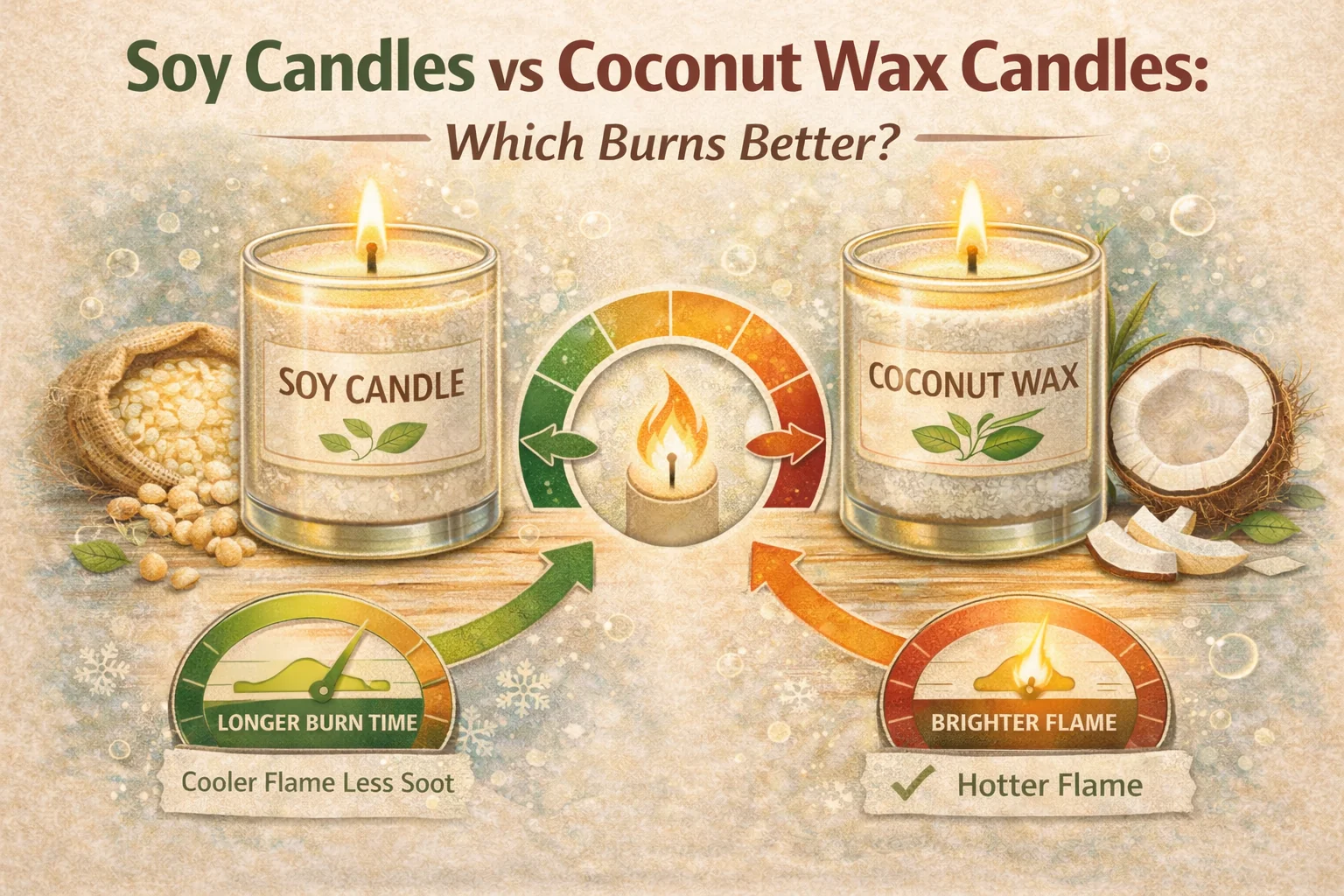
Soy is often praised for long burn times because it can burn slowly when properly formulated and wicked. Coconut wax can also burn slowly, but because many coconut blends melt readily, burn time can vary more depending on the exact blend and wick.
In practice, burn time is less about “soy vs coconut” and more about jar diameter and wick size. A wide jar with a strong wick will generally consume wax faster than a narrower vessel, regardless of wax type.
If you want the longest-lasting candle, look for a design that matches your habits: a vessel size appropriate for your room, a wick that doesn’t run too hot, and instructions that encourage longer sessions to prevent tunneling.
Scent Throw: Which Smells Stronger While Burning?
Coconut wax candles—especially coconut blends—often have a reputation for strong, smooth hot throw. Many people describe the scent as “more luxurious” or “more room-filling” with less sharpness. This can be true, largely because coconut wax can carry fragrance well and release it efficiently as the wax liquefies.
Soy can also produce excellent scent throw, but it’s more sensitive to the fragrance formulation and curing time. Some soy candles need a longer cure to reach peak performance, and some fragrance profiles simply perform better in certain wax systems.
If you’re scent-sensitive, “stronger” is not automatically “better.” Coconut wax candles that throw strongly can be overwhelming in small rooms. For bedrooms and offices, a balanced throw can be more comfortable than maximum throw.
Cold Throw: Which Smells Better Before You Even Light It?
Cold throw is the scent you get from a candle when it’s unlit. Coconut-based candles often have a very appealing cold throw, which is part of their boutique appeal—pick one up, and the aroma is immediately noticeable.
Soy candles range widely. Some have subtle cold throw and strong hot throw; others smell bold on the shelf. Neither is a guarantee of quality, but it does influence the shopping experience.
Jar Appearance and “Pretty Burn”: Which One Looks Better?
Coconut wax candles often burn with a glossy, smooth-looking melt pool and clean jar sides, which many people find visually satisfying. Soy wax can sometimes show frosting (a white crystalline look) or a more matte texture. Frosting is normal for soy and usually cosmetic.
If aesthetics matter—especially if you use candles as decor—coconut blends often win on “pretty burn,” while soy can be more rustic in appearance depending on formulation and temperature changes.
Wick Compatibility: Which Wax Is More Forgiving?
A candle’s wick is the engine, and wick compatibility can make or break performance. Coconut blends tend to be a bit more forgiving in many jar formats, which is why many premium brands lean on coconut as a base.
Soy can be highly consistent when tuned correctly, but it often requires more careful matching of wick size to jar diameter and fragrance load. If a soy candle is under-wicked, it may tunnel. If it’s over-wicked, it may soot or burn too hot. Coconut can still have these issues, but many people experience fewer “finicky” burns with coconut blends.
Heat Output and Container Temperature: Which Runs Cooler?
The perceived “heat” of a candle depends on flame size and how quickly the melt pool expands. A candle with a large flame and deep melt pool can heat the jar more quickly. This is not automatically dangerous, but it’s something to respect—especially with large vessels.
Coconut wax candles that melt quickly can sometimes feel like they “get going” faster. Soy can be slower to warm in some builds. The best candle in either category is one that stays controlled: the jar becomes warm but not excessively hot, and the flame remains steady without smoking.
Price and Value: Why Coconut Wax Often Costs More
Coconut wax candles are often priced higher, partly because coconut wax and coconut-based blends can be more expensive to source and produce. They are also frequently positioned as premium products with upgraded packaging, higher-end fragrance profiles, and more intensive testing.
Soy candles typically offer excellent value and a wide range of choices from budget to premium. If you burn candles often, soy can be the practical daily driver, while coconut can feel like a “treat candle” for special moods or gifting.
Which Is Better for Beginners?
If someone is new to candles and wants a low-maintenance experience, coconut wax candles (especially well-tested coconut blends) can feel easier: strong scent, smooth melt pool, and a visually pleasing burn.
Soy is also beginner-friendly, but it benefits from a few habits: longer first burns, wick trimming, and avoiding drafts. If you’re willing to follow basic candle care, soy can perform wonderfully.
How to Judge Burn Quality in Either Wax
Instead of relying on a wax label, use simple performance checks: a steady flame that isn’t flickering wildly, minimal visible smoke, and a melt pool that gradually reaches the edges without racing. The scent should bloom comfortably, not feel sharp or irritating, and the jar should remain warm—not dangerously hot.
If a candle repeatedly tunnels despite good burn habits, it may be under-wicked for that vessel. If it smokes heavily or soots, the wick may be too large, the wick may be too long, or the candle may be in a draft. These issues can happen in both soy and coconut candles.
So…Which Burns Better?
If “better” means an easy, smooth, aromatic burn with strong performance right out of the box, coconut wax candles—especially coconut blends— often have an edge. They tend to melt evenly, look polished, and deliver bold scent throw with less fuss in many homes.
If “better” means consistent value, reliable burn time, broad availability, and a candle that performs excellently when properly wicked and cared for, soy is hard to beat. A high-quality soy candle can burn cleanly and evenly, last a long time, and feel comfortable in everyday use.
The best choice depends on your priorities: choose coconut wax if you want a premium-feeling scent experience and a “pretty burn,” and choose soy if you want dependable performance and great value across a wide range of styles.
Practical Buying Tips for a Better Burn
Look for brands that talk about testing, wick selection, and jar sizing rather than only buzzwords. Choose the right candle size for your room: a small candle in a large open space may disappoint, while a powerful candle in a small room can feel overwhelming.
Keep your candle away from drafts, trim the wick before lighting, and allow enough burn time for the melt pool to develop evenly. These habits often matter more than whether the label says soy or coconut.
In the end, “burning better” is about balance. The best candle is the one that fits your space, your scent tolerance, and your daily routine— and both soy and coconut wax can deliver that when the candle is made well.