
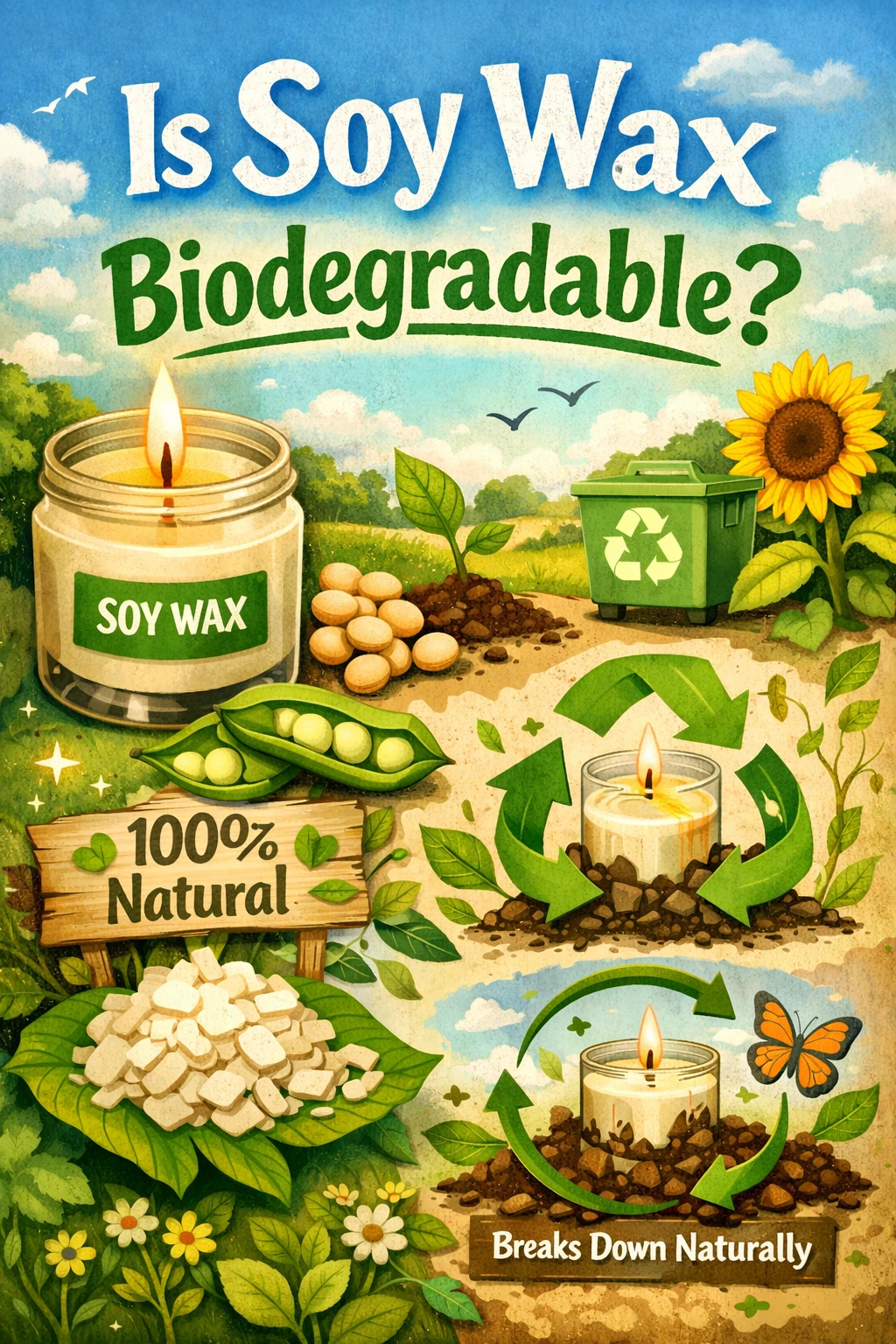
Soy wax is often marketed as a “natural” alternative to paraffin, and one of the most common questions that follows is whether it is biodegradable. The honest answer is: soy wax is generally considered biodegradable under the right conditions, but the details matter. Biodegradability depends on what the wax is made of, how it is processed, what additives are present, and where it ends up after use.
What Soy Wax Actually Is
Soy wax is typically produced from soybean oil that has been processed to create a solid wax-like material. The most common route is through hydrogenation, which changes the oil’s fatty acids so the final product becomes stable and solid at room temperature. Even though soy wax originates from a plant source, it is still a manufactured material with properties intentionally engineered for candle performance—things like melt point, firmness, and burn behavior.
Biodegradable vs. Compostable: Not the Same Thing
“Biodegradable” means microorganisms can break a substance down into simpler compounds over time. “Compostable” usually implies it breaks down in a compost environment within a predictable timeframe and leaves no harmful residue.
Soy wax can be biodegradable, but that does not automatically mean you should treat it as compostable in a home compost bin. Waxes tend to break down slowly, and large chunks can persist for a long time, especially in low-oxygen or cooler environments.
Why Pure Soy Wax Tends to Biodegrade
In simplified terms, soy wax is made from fatty acids derived from a biological source. Many microorganisms can metabolize fats and oils, especially when conditions are favorable—adequate warmth, oxygen, moisture, and microbial activity. Over time, this can lead to breakdown into simpler organic components.
That said, “over time” can mean very different things depending on the environment. A thin residue might degrade relatively faster than a thick slab of wax.
The Additives That Change the Answer
The phrase “soy wax” doesn’t always mean “100% soy wax.” Many candle waxes are: soy blends (soy mixed with paraffin, palm, microcrystalline wax, or other additives) or soy wax with performance enhancers.
Additives that can affect biodegradability include:
Fragrance oils: Some fragrance components are readily biodegradable, while others can be more persistent.
Dyes and colorants: Depending on chemistry, they may slow breakdown or leave residues.
Hardeners and polymers: Sometimes used to improve hot throw or texture; these can reduce biodegradation rates.
Paraffin blending: Paraffin is petroleum-derived and generally less biodegradable than plant-based waxes, especially in natural conditions.
If a candle is labeled “soy,” it’s worth checking whether it states 100% soy or soy blend. From an environmental perspective, that distinction matters more than most packaging suggests.
What “Biodegradable” Looks Like in Real Life
People sometimes interpret biodegradable to mean “safe to dump outdoors” or “fine to pour down the drain.” That’s not a good idea. Even a biodegradable substance can create problems during the time it remains intact.
If wax enters plumbing, it can cool and solidify, contributing to blockages. In soil, large amounts of wax can form a water-resistant layer that interferes with aeration. In waterways, fats and waxy substances can float, coat surfaces, and disrupt local conditions before they break down.
In other words: biodegradable does not mean harmless in every context.
How Long Does Soy Wax Take to Break Down?
There isn’t a single universal timeline. Breakdown depends on:
Temperature: Warmer conditions generally speed up microbial activity.
Oxygen availability: Aerobic environments usually break materials down more efficiently.
Wax thickness: Thin films degrade faster than thick blocks.
Additives: Fragrances, dyes, and stabilizers can slow or complicate degradation.
Environment type: Industrial composting, soil, landfill, and water all behave differently.
In landfill-like conditions (low oxygen, lower microbial diversity), biodegradation can be slow for many organic materials, including waxes.
Is Soy Wax “Eco-Friendly” by Default?
Biodegradability is only one piece of a larger environmental picture. A product can be biodegradable and still raise environmental concerns depending on:
Agricultural impacts: Land use, water use, and pesticide use in soybean farming vary by region and practice.
Processing and transport: Refining, hydrogenation, packaging, and shipping add emissions.
Blending and additives: A soy blend may reduce the “plant-based” benefits people expect.
Use phase: Candle performance (soot, fragrance load, burn stability) depends on wick choice and formulation.
A realistic view is that soy wax can be a better option in many cases—especially compared with purely petroleum-derived waxes—yet it is not automatically “perfect.”
Practical Disposal Guidance for Leftover Soy Wax
If you want the most responsible outcome for leftover wax, focus on reuse first:
Reuse it: Remelt leftovers into a new candle, wax melts, or fire starters (if appropriate and safe).
Wipe before washing: If a container has wax residue, scrape or wipe it with paper first to reduce wax going into drains.
Trash small leftovers: For small hardened amounts, disposing in regular waste is often the least problematic option.
Recycle containers separately: If the jar is glass, clean it well and recycle according to local rules.
The key is to avoid sending wax into plumbing or directly into the environment.
How to Evaluate “Soy” Claims on Labels
If biodegradability and environmental impact matter to you, these label details are helpful:
Look for “100% soy wax” rather than “soy blend.”
Ask about additives (dyes, UV stabilizers, performance enhancers).
Check wick material (cotton, wood, or other) and whether the wick contains metal cores.
Fragrance transparency is a plus—some makers provide allergen and sustainability notes.
When information is missing, “soy” alone is not enough to conclude the wax is fully plant-based or fast-biodegrading.
So, Is Soy Wax Biodegradable?
In most cases, yes—soy wax is biodegradable, especially when it is primarily composed of hydrogenated soybean oil and used in small amounts. However, biodegradation speed and environmental behavior vary with formulation and disposal conditions.
The most accurate takeaway is: pure soy wax tends to biodegrade over time, but you should still dispose of it responsibly and avoid introducing wax into drains or natural waterways. If you want the most sustainable path, reuse leftovers where possible and choose products that clearly disclose whether they are 100% soy or a blend.