
Soy candles are often marketed as a “cleaner-burning” option, so it can feel confusing (and a little disappointing) when you notice smoke curling up from the flame or a dark haze near the jar rim. The good news is that smoke does not automatically mean your candle is “bad” or unsafe. In most cases, smoking is a fixable combustion issue caused by wick behavior, airflow, fuel balance, or how the candle is being used.
This guide breaks down what candle smoke really is, why it happens in soy candles specifically, and what you can do to reduce it. You’ll also learn how to tell harmless “momentary” smoke from repeated sooting that can stain jars, walls, and indoor surfaces.
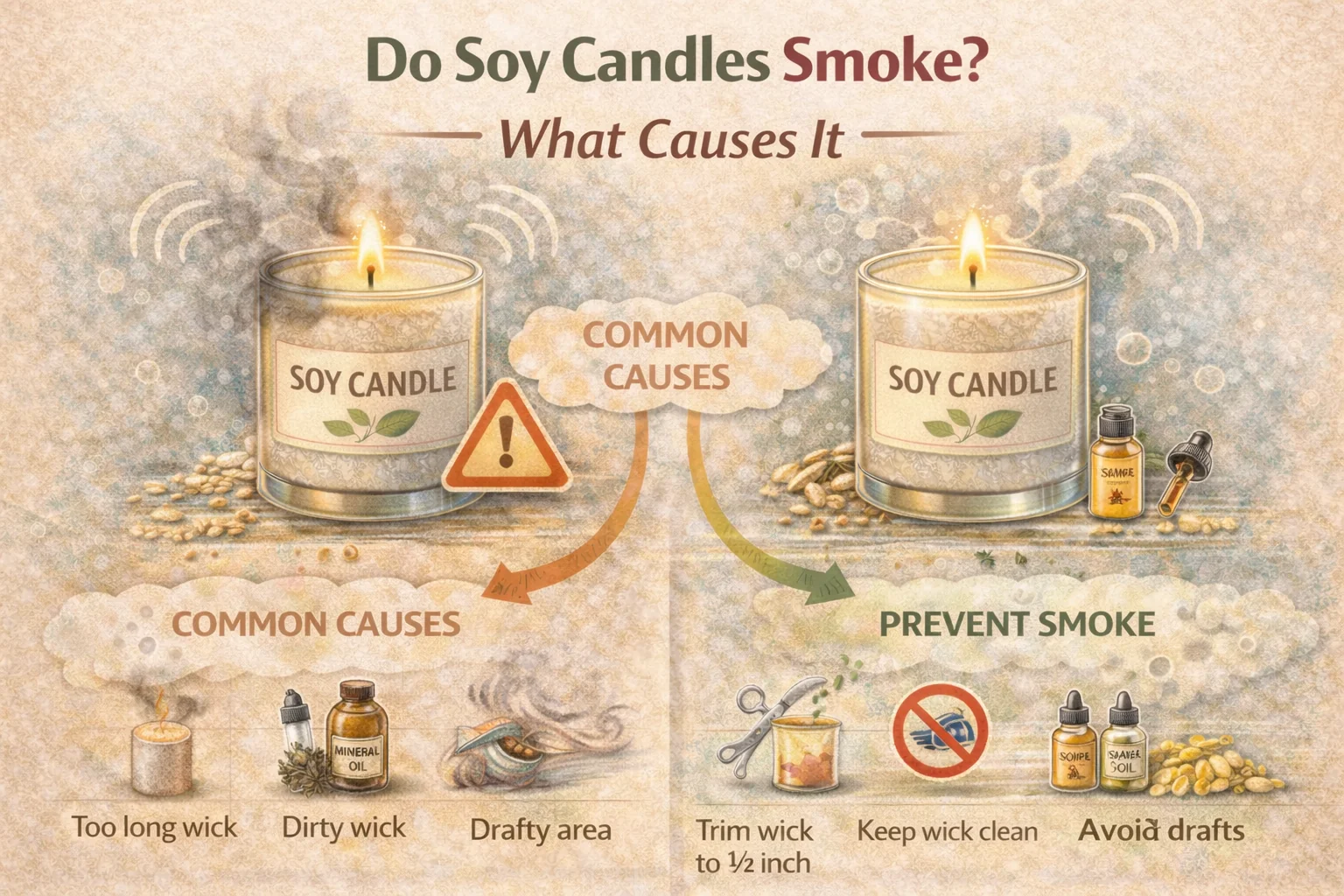
First, what does “smoke” mean with candles?
When people say a candle is “smoking,” they usually mean one of these:
A brief puff of grey smoke when you blow the candle out. A thin stream of smoke while the candle is actively burning. Black residue (soot) on the jar rim, wax surface, or nearby walls. A stronger “burnt” smell that seems different from the fragrance.
The first one—smoke at extinguishing—is normal for almost every candle type. The wick is still hot, wax vapor is still present, and the flame is interrupted suddenly, so unburned fuel becomes visible as smoke. The more important issue is smoke during burning or repeated black soot buildup, because that signals incomplete combustion.
Why soy candles can still smoke (even if they’re “clean”)
A candle flame is a tiny combustion system. Wax melts, travels up the wick, vaporizes, and burns as a mix of fuel vapor and oxygen. Smoke shows up when the flame doesn’t get enough oxygen to fully burn the fuel, or when too much fuel is being delivered too quickly.
Soy wax can burn nicely, but it also behaves differently than paraffin. Soy often has a different melt pool characteristics and can be paired with a wide range of wicks and fragrance loads. When the wick choice, fragrance, or environment is slightly off, a soy candle can soot or smoke just like any other candle.
The most common causes of smoking in soy candles
Smoking usually comes down to one (or a combination) of the following factors. If you’ve ever seen a candle flame getting tall, flickery, or “dancing,” you’ve likely seen the early warning signs.
A wick that’s too large for the jar and wax blend
An oversized wick pulls up more melted wax than the flame can fully burn. That creates excess fuel vapor and leads to soot particles—tiny carbon bits that appear as smoke and then stick to glass. In a soy candle, this can happen if the candle was wicked “hot” to improve scent throw, or if the jar diameter and wick size don’t match well.
Clues: a flame that is very tall, a mushroom-shaped carbon cap on the wick, frequent blackening on the jar rim, or a melt pool that gets deep and aggressive quickly.
A wick that’s too long (not trimmed)
Even a correctly sized wick can smoke if it’s left too long. A long wick increases flame height, increases fuel consumption, and often forms a “mushroom” tip. That mushroom is partly unburned carbon, and it’s a classic soot generator. Trimming is one of the simplest ways to reduce smoke.
Drafts and airflow that disturb the flame
Candle flames want steady air. Drafts from fans, air conditioners, open windows, or even walking past the candle repeatedly can cause the flame to flicker. Flickering disrupts the oxygen-to-fuel balance and increases incomplete combustion, which creates smoke and soot.
Clues: a flame that leans strongly to one side, rapid flickering, or soot appearing more on one side of the jar.
Too much fragrance oil (or a heavy fragrance blend)
Fragrance oils are part of the “fuel system.” If a candle is loaded with a high fragrance percentage or the fragrance is naturally heavier, it can change how the wick burns and how the wax vaporizes. Some blends can encourage mushrooming or make the flame run hotter and dirtier if the wick isn’t matched carefully.
This doesn’t mean “fragrance is bad.” It means the candle needs the right wick and testing for that specific scent profile. When the balance is off, smoking is one of the first symptoms.
Impurities on the wax surface or in the jar
Dust, leftover match debris, bits of wick trimmings, or any small particles sitting in the melt pool can burn and create smoke. Sometimes it’s not the candle formula at all—just a little “contamination” that turns into a tiny smoke source once it heats up.
Burning the candle for too long
Extended burn sessions can overheat the jar and create a deeper, hotter melt pool. As the wax gets very warm, fuel delivery increases. The flame may grow larger, and soot becomes more likely—especially near the end of the candle’s life when the melt pool is naturally deeper.
If you notice the flame getting progressively taller over time, it’s often a sign the candle has been burning long enough for that session.
Wick “mushrooming” (what it is and why it matters)
Mushrooming is the bulb-like cap that forms on the tip of a wick. It’s usually a mix of carbon and residue created when the wick is consuming more fuel than the flame can burn cleanly. Mushrooming often leads directly to visible smoke and black soot on the jar.
Occasional small mushrooming can happen, but repeated large mushrooming is a sign of a wick or fuel balance issue.
Is candle smoke dangerous?
In normal household use, a small amount of smoke—especially at extinguishing—typically isn’t a big concern. The bigger issue is persistent sooting while burning, which indicates incomplete combustion and can increase indoor particulate matter while also leaving stains on glass and nearby surfaces.
If anyone in the home is sensitive to smoke, asthma triggers, or strong odors, it’s worth being extra strict about trimming wicks, keeping candles away from drafts, and avoiding long burn sessions. The goal is a stable flame that burns without visible smoke during normal operation.
How to reduce smoking and soot (practical fixes)
You can fix most smoking issues with a few simple habits. These don’t require special equipment—just consistency.
Trim the wick before each burn
A trimmed wick helps keep flame height controlled and reduces mushrooming. If the wick looks bent, crusty, or has a carbon cap, trim it back so it’s neat and ready to burn cleanly.
Keep the flame away from drafts
Place candles away from fans, vents, open windows, and high-traffic pathways. The steadier the flame, the cleaner the burn. If the flame is flickering constantly, you’re almost guaranteed more soot.
Burn in reasonable sessions
Short sessions can cause tunneling, but ultra-long sessions can cause overheating and smoke. A balanced burn session helps the candle behave as intended and keeps the flame from growing too intense.
Keep the melt pool clean
Remove wick trimmings, match heads, or debris from the wax surface. If anything falls into the melt pool, it can become a tiny smoke source and contribute to soot.
Extinguish without a smoke cloud
If you blow out a candle, you’ll often see a visible smoke plume. To minimize that, extinguish gently and avoid “blasting” the flame. Using a snuffer can reduce the smoke burst, but technique matters too: the calmer the extinguish, the less smoke you usually see.
How to tell if your soy candle is burning properly
A healthy candle burn tends to look calm and steady. Use these signs as a quick check:
The flame is stable and not wildly flickering. The flame height looks controlled rather than tall and roaring. The wick tip isn’t forming a large, repeated mushroom cap. The jar rim stays mostly clean (a little discoloration over time can happen, but heavy black soot is a red flag). The scent smells like the fragrance, not like “burnt smoke.”
If your candle fails multiple checks consistently, it may be a wick mismatch, a drafty location, or a candle that’s over-fragranced for the wick chosen.
What if my candle smokes no matter what I do?
If you’re trimming the wick, keeping it away from drafts, and burning in reasonable sessions, yet you still get visible smoke during the burn, it may be a design issue—most often the wick is too large or the fuel balance isn’t well-matched for that fragrance.
You can try one more practical step: trim slightly more than usual and monitor whether the flame calms down. If the candle continues to soot heavily, consider discontinuing indoor use in small rooms and switching to a candle that burns more steadily in your environment.
Quick myths that cause unnecessary worry
“Soy candles never smoke.” They can, especially with the wrong wick size or in a drafty room.
“Smoke means the candle is toxic.” Smoke most often means incomplete combustion, not a specific ingredient problem. The fix is usually better burning conditions and wick control.
“More fragrance always means a better candle.” Strong scent throw depends on balance and testing. Too much fragrance without proper wicking can increase soot.
Bottom line
Yes, soy candles can smoke—but it’s usually about how the candle is burning, not whether soy is “good” or “bad.” The most common triggers are an untrimmed wick, a wick that’s too large, drafts that make the flame flicker, and fuel imbalance from heavy fragrance loads. With the right placement and simple wick care, most soy candles burn with minimal smoke and far less sooting.
If you treat the flame like a small controlled system—steady air, correct wick length, clean melt pool—you’ll get a cleaner look, a better scent experience, and a candle that behaves the way it was meant to.