If you’ve ever shopped for candles, you’ve probably noticed three wax types mentioned again and again: soy wax, paraffin wax, and beeswax. They’re often described in strong terms—one is “natural,” another is “classic,” another is “premium.” But when you’re standing in front of a shelf of candles (or scrolling online), the real question is much simpler: which wax is actually better for how you want to use a candle?
The truth is that each wax has strengths and weaknesses. Some waxes are better for strong fragrance, others are better for long, cozy burn times, and others shine when you want a clean, traditional, no-frills candle experience. “Better” depends on what you care about most—scent throw, burn behavior, price, aesthetics, candle type, or even how easy the wax is to clean up.
This guide breaks down the differences in a practical, beginner-friendly way. By the end, you’ll know what to buy for a relaxing home candle, what makes the best gift candle, what wax works best for strong scent, and which one makes sense if you want a traditional candle that lasts.
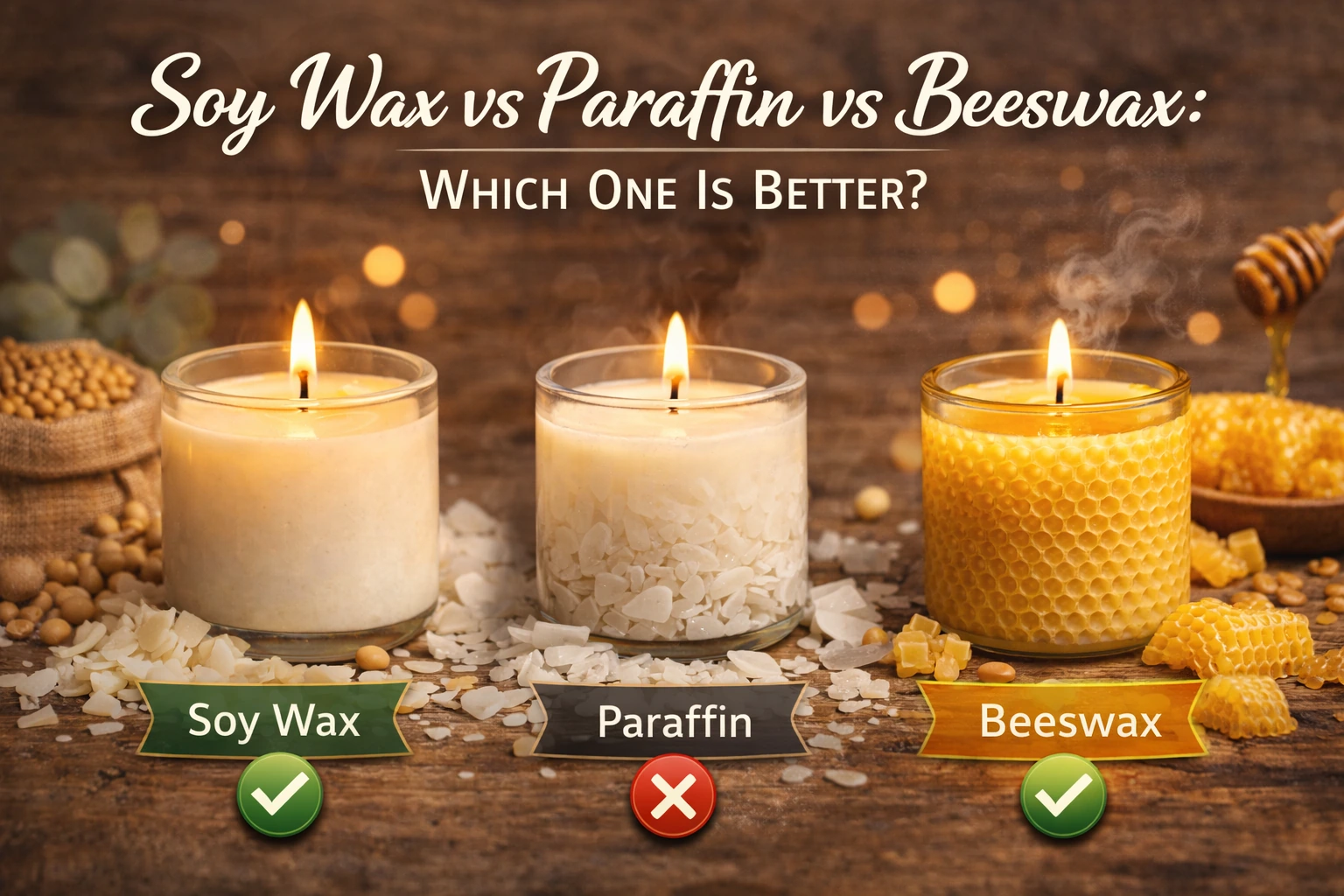
Quick Definition: What Each Wax Actually Is
Before comparing performance, it helps to know what these waxes are made from. Candle wax isn’t just “wax.” It’s the fuel source for the flame, and the wax chemistry changes how a candle melts, holds fragrance, and burns.
Soy wax is made from soybean oil that’s been processed into a solid wax. It’s plant-based and commonly used for modern jar candles and scented candles. Soy wax is typically softer than other waxes, which is why it’s often poured into containers rather than used in freestanding candle shapes.
Paraffin wax is derived from petroleum and has been a standard candle wax for decades. It’s widely used because it’s easy to manufacture, performs well in many candle types, and can deliver strong fragrance throw. Many mass-market scented candles are made from paraffin wax or paraffin blends.
Beeswax is a natural wax produced by honeybees. It’s one of the oldest candle materials in human history and is well known for its warm, natural look and classic feel. Beeswax is typically harder than soy wax and is often used for tapers, pillars, and traditional candle shapes.
Burn Performance: Which Wax Burns Best?
A candle’s burn performance is what you feel day to day. Does it melt evenly? Does it tunnel? Does it soot? Does it feel calm and steady? Wax type matters, but wick choice, container shape, and how you burn the candle matter too. Still, each wax has typical burn behavior patterns.
Soy wax is often appreciated for a slower, more even burn in container candles. Because it has a relatively low melting point, it forms a melt pool without needing an aggressive flame. When it’s wicked properly, soy wax can burn smoothly and last a long time relative to its weight.
Paraffin wax is extremely versatile and can perform well in many candle designs. It melts easily and can be tuned for different burn styles, from quick-burning scented jars to long-burning pillars. Some paraffin candles may produce more visible soot if the wick is too large or if the candle is burned in drafts, but high-quality paraffin candles can burn cleanly when designed well and burned correctly.
Beeswax is known for being slow-burning and stable, especially in pillars and tapers. It’s often chosen for candles that are meant to stand on their own and burn for a long time. Beeswax candles tend to feel solid, traditional, and dependable. For people who love the candle flame itself more than intense fragrance, beeswax can feel especially satisfying.
Scent Throw: Which Wax Smells Strongest?
If you’re buying candles primarily for fragrance, scent throw becomes your most important category. Candle scent throw is usually talked about in two ways: cold throw, which is how strong a candle smells when it’s unlit, and hot throw, which is how strong it smells while burning.
Paraffin wax has a strong reputation for excellent scent throw. It can release fragrance into a room quickly and powerfully, especially in candles designed to fill large spaces. This is one reason paraffin remains very common in mass-market scented candles and many strongly fragranced candle lines. If you want your whole house to smell like vanilla bakery, pine forest, or fresh laundry in a short time, paraffin candles often deliver that big impact.
Soy wax can produce beautiful scent throw too, but it tends to be more gradual. A good soy candle often fills the room in a smooth, steady way rather than hitting hard all at once. Some people prefer that because it feels more subtle and comfortable. Soy scent throw depends heavily on the candle maker’s formula, fragrance quality, and wick selection, which is why premium soy candles often outperform cheaper ones dramatically.
Beeswax candles usually aren’t purchased for strong added fragrance. Beeswax often has a naturally mild honey-like aroma of its own, but it’s generally subtle. Many beeswax candles are sold unscented, and when scented versions exist, they’re often gentle rather than bold. Beeswax is best for people who want candlelight and atmosphere without a heavy fragrance.
Appearance and Style: Which Wax Looks Best?
Candle lovers often fall in love with wax type because of aesthetics. The wax’s color, texture, and finish can change the mood of a candle even before it’s lit. Some waxes look modern and clean, while others feel classic and handcrafted.
Soy wax typically looks creamy and soft, especially in container candles. It often has a matte finish and can develop natural frosting or cloudy patterns on the surface. This is normal for soy wax and doesn’t mean it’s poor quality. Many people actually like this because it gives soy candles a cozy, handmade vibe.
Paraffin wax can look very smooth and glossy. It’s easy to color and can hold bright dyes beautifully, which is why you often see paraffin used in decorative candles. Paraffin can also be formulated into very clear, consistent finishes, which helps mass-produced candles look uniform and polished.
Beeswax usually has a naturally warm golden tone, though it can be lighter or darker depending on how it’s processed. It often looks rich and traditional, especially in tapers and pillars. Beeswax candles can feel like something timeless, like a candle you’d find in a cozy cabin, a heritage home, or a handmade market stall.
Cleanliness and Soot: What You’ll Notice at Home
Many candle shoppers worry about soot, smoke, and that black residue that can build up inside glass jars or on nearby walls. While wax type can influence soot levels, the biggest factors are wick length, burn environment, and how stable the flame is while the candle burns.
Soy wax is often described as clean-burning in everyday use, especially when the wick is properly trimmed and the candle isn’t exposed to drafts. Many users find soy candles leave less visible soot in containers, which helps jars look cleaner over the candle’s life.
Paraffin wax can be clean-burning as well, but it’s more likely to show soot if the wick is too large or if the candle burns with a flickering, unstable flame. This is why paraffin candles sometimes have a reputation for smoke. In reality, high-quality paraffin candles can burn nicely, but they benefit a lot from proper candle care.
Beeswax often burns with a steady flame and is commonly used in unscented designs, which can result in a very clean-feeling candle experience. Because beeswax is frequently chosen for classic candle shapes like tapers, the experience is usually more about candlelight than heavy fragrance.
Price and Value: Which Wax Is Most Affordable?
Budget is a real factor, especially if you burn candles often. Some people light a candle every night, while others only use candles during special moments. Wax choice can influence price, but packaging, fragrance quality, and brand positioning also affect cost dramatically.
Paraffin wax candles are usually the most affordable and are widely available. Because paraffin is commonly used in mass production, you can find a huge range of price points, including very budget-friendly options. If you want an inexpensive candle for occasional use or seasonal décor, paraffin candles often offer strong scent for less money.
Soy wax candles often sit in the middle of the price range. You can find affordable soy candles, but many soy candle brands position themselves as premium lifestyle products with nicer vessels and curated scents. The value can be excellent if you get a candle that burns evenly and lasts a long time.
Beeswax candles are typically the most expensive of the three. Beeswax is a natural product that requires beekeeping and careful processing, which can raise costs. Beeswax candles often feel like a specialty item, best for people who appreciate traditional craft, long burn times, and a naturally warm look.
Which Wax Is Better for Different Candle Types?
Wax type also depends on candle format. Not every wax works equally well in every candle shape. Some waxes are happiest in jars, while others shine in pillars or decorative designs.
Soy wax is a star in container candles. It’s easy to pour into jars, it has a smooth look, and it often performs best when it’s supported by a vessel. Many modern scented candle collections are soy-based for this reason.
Paraffin wax works in almost everything: jar candles, pillars, tapers, decorative molded shapes, and mass-market scented candles. It’s flexible and easy to color, which makes it popular for seasonal and decorative candles that need bold looks and strong scent.
Beeswax is especially loved in pillars and tapers. Its hardness and stability make it well suited for freestanding candles that hold their shape. Beeswax candles often feel traditional and elegant, making them popular for dinner tables, ceremonies, and classic home décor styles.
Sustainability and Lifestyle Preferences
Many shoppers consider wax choice a lifestyle decision. Some prefer plant-based ingredients, some prefer traditional handmade materials, and others prioritize affordability and strong scent. This is where personal preference plays a big role.
Soy wax is often chosen by people who like the idea of a vegetable-based wax. It fits well into modern “simple home” habits—soft lighting, clean décor, and calming scents. Many soy candles are marketed in a way that feels fresh and modern.
Beeswax is often chosen by people who value tradition and natural materials. Beeswax candles can feel like a classic, craft-based product. They’re frequently used in unscented form, which makes them appealing to people who want atmosphere without fragrance in the air.
Paraffin wax is often chosen for accessibility. It’s easy to find, budget-friendly, and it performs strongly in fragrance-heavy candles. For many households, paraffin candles are simply the most practical way to enjoy scented candles regularly without spending a lot.
What Matters More Than Wax Type
It’s easy to get caught up in wax debates, but there’s a reality that candle lovers learn quickly: the quality of the candle matters more than the wax category. A well-made candle of any wax type can be excellent, and a poorly made candle of any wax type can be disappointing.
Wick choice matters enormously. A wick that’s too small can cause tunneling and weak fragrance. A wick that’s too large can create big flames, smoke, and fast burn times. The best candle brands test their wicks carefully for each container and wax formula.
Container size matters too. Wide containers often need multiple wicks to melt evenly. Small jars might perform best with a single wick. Fragrance oil quality also matters, and a candle with high-quality fragrance can outperform a cheap candle regardless of wax type.
Which One Is Better for You?
Choosing the “best” wax really comes down to the experience you want in your home. If you love modern jar candles, gentle ambiance, and a smooth scent that builds slowly, soy wax is often a perfect match. It’s popular for everyday burning and tends to feel cozy, calm, and easy to live with.
If you want strong fragrance that fills a room quickly, paraffin candles often deliver the most dramatic scent throw. They’re also widely available and affordable, making them a practical choice for seasonal scents, parties, and big “wow” fragrance moments.
If you want a traditional candle experience that feels classic and timeless, beeswax can be a beautiful choice. It’s especially satisfying in tapers and pillars, and it’s often chosen when candlelight itself is the main feature rather than heavy fragrance.
Final Verdict: There Isn’t One Winner, Only Better Matches
Soy wax, paraffin wax, and beeswax all exist because they each do something well. Soy wax is loved for its modern container-candle feel and steady burn style. Paraffin wax is widely used for its versatility and strong scent performance. Beeswax is prized for its classic look, stability, and timeless charm.
The best wax is the one that matches your goal. If you want your home to feel calm and softly scented, soy is often ideal. If you want powerful fragrance on a budget, paraffin can be the best value. If you want a premium, traditional candle that feels like a craft product, beeswax is hard to beat.
No matter what wax you choose, the biggest upgrades you can make are simple: buy from a brand that tests performance, choose a candle size that matches your room, trim the wick, and let the candle form a full melt pool. Do that, and almost any wax can create a beautiful candle experience.