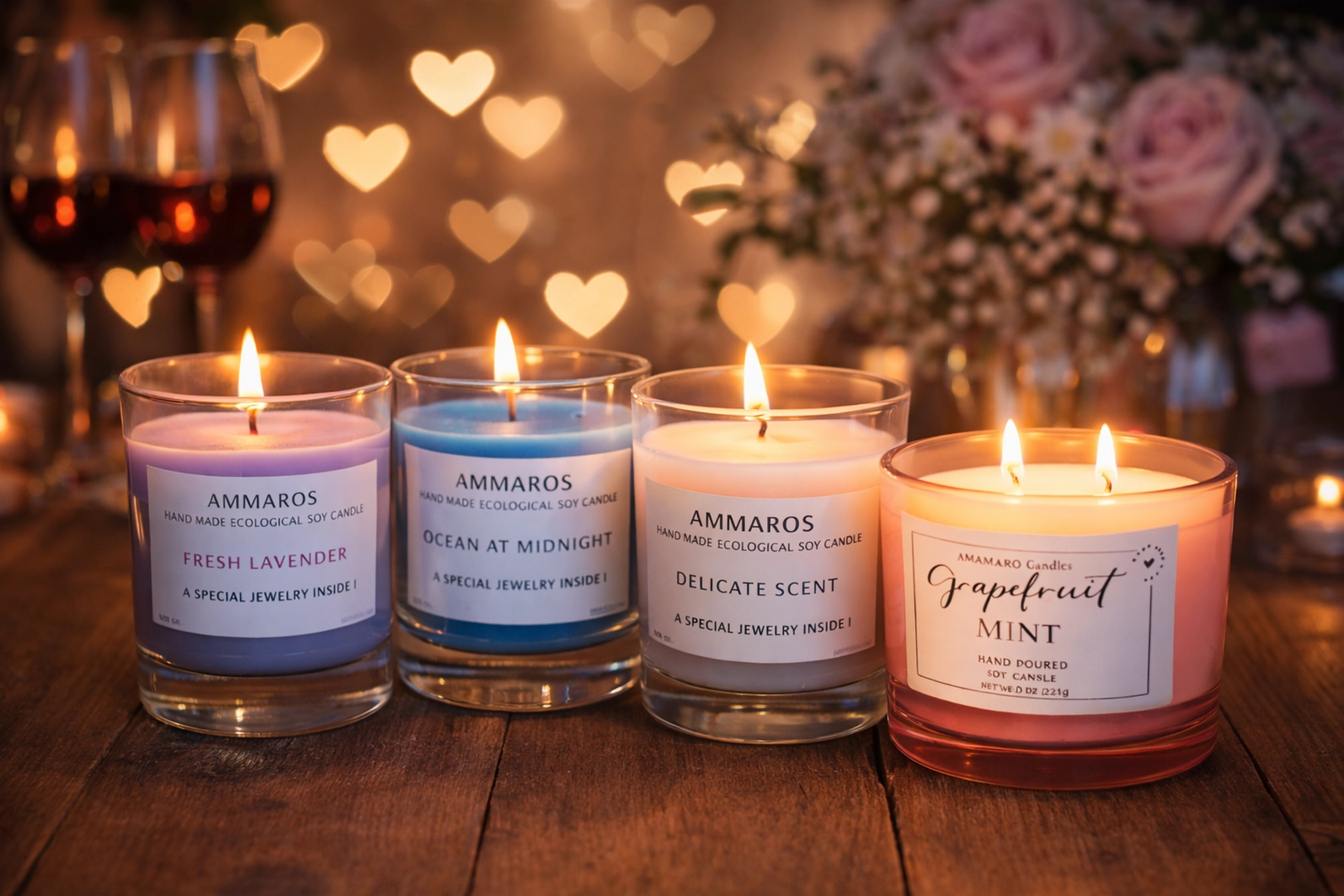
A candle gift set feels thoughtful because it’s more than a single fragrance—it’s a small “collection” that can match moods, seasons, rooms, and moments. The secret to a gift set that people actually use is scent pairing: choosing fragrances that make sense together, flow naturally from one to the next, and never feel like random duplicates. Pairing doesn’t require a perfume expert’s nose. With a few simple scent-family ideas and some practical tips, you can create sets that feel curated, balanced, and surprisingly personal.
This guide walks through how to build candle gift sets that feel intentional—whether you’re choosing a trio for a friend, designing a seasonal bundle, or building a “home scent wardrobe” for someone moving into a new place. You’ll learn how to layer fragrance families, how to avoid common pairing mistakes, and how to match scents to rooms, personalities, and occasions.
Start With Scent Families, Not Individual Notes
Most candles can be grouped into a few broad scent families. Pairing becomes much easier when you think in families first and details second. A well-made gift set usually blends two to four families, creating variety without chaos. When you pick too many unrelated families, the set can feel scattered. When you pick only one family, it can feel repetitive.
Common scent families include fresh and clean (linen, cotton, rain, ocean air), citrus (lemon, grapefruit, orange blossom), floral (jasmine, rose, lavender), herbal and green (eucalyptus, rosemary, basil, cut stems), woody (cedar, sandalwood, pine), resinous and smoky (incense, amber, campfire, leather), gourmand (vanilla, caramel, cocoa), and spicy (cinnamon, clove, cardamom). Most fragrances fit into one primary family and one secondary family. That overlap is what makes pairing feel natural.
Think Like a Playlist: Flow, Contrast, and a “Main Track”
A great candle set behaves like a playlist. There’s usually a familiar anchor scent that feels universally appealing, a brighter scent that feels uplifting, and a deeper scent that feels cozy or grounded. The goal is not to make every candle smell similar. The goal is to make them feel like they belong in the same world.
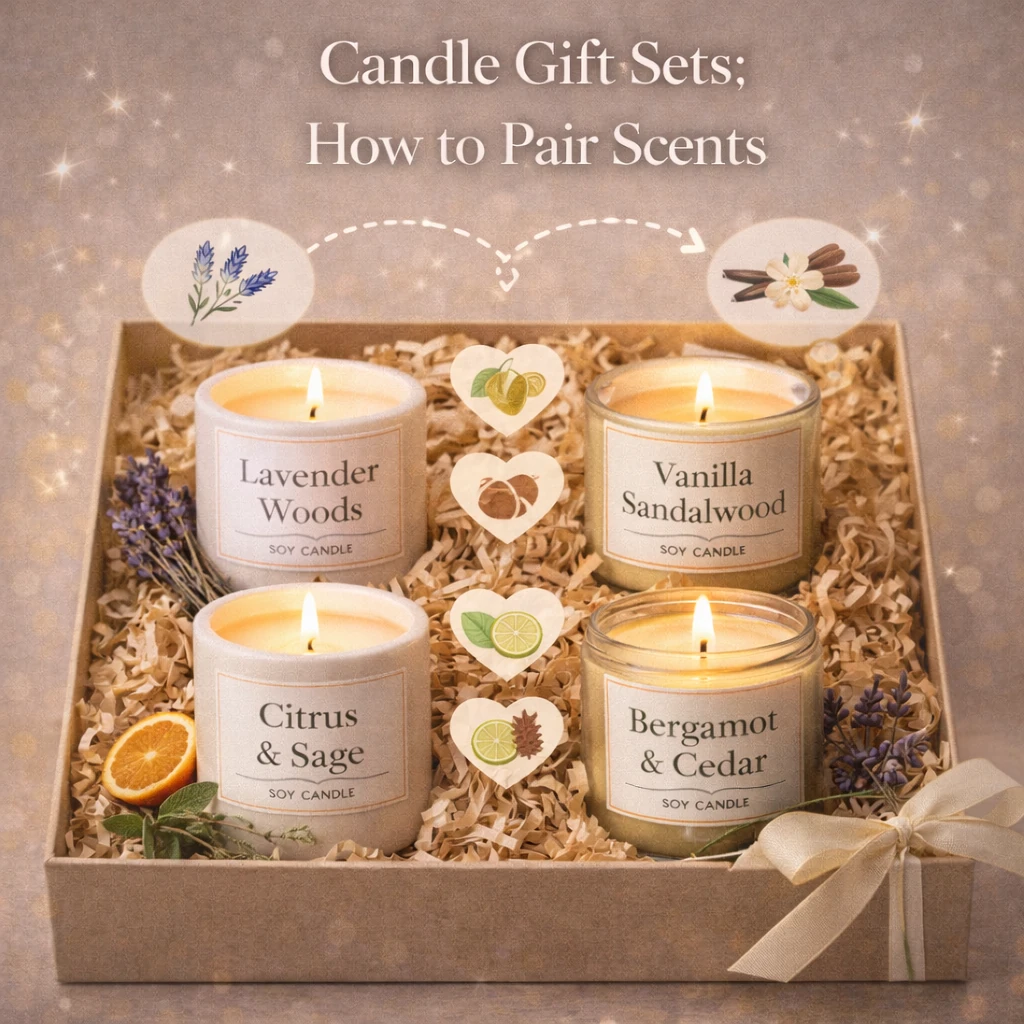
Start by choosing a “main track”—the most broadly loved candle in the set. Think soft vanilla, fresh linen, warm amber, or gentle lavender. Then add one candle that contrasts in energy (such as a citrus or green herbal scent) and one candle that contrasts in depth (such as a woodsy or smoky fragrance). If you’re building a larger set, add one more candle that bridges the bright and the deep—something like bergamot and cedar, lavender and vanilla, or pear and amber.
Use the Bright–Soft–Deep Pairing Formula
If you want a reliable pairing method that works for most gift recipients, try the Bright–Soft–Deep formula. It creates a balanced set that covers different times of day and different moods.
Bright scents feel crisp and energizing. They often include citrus, fresh fruit, mint, airy marine notes, or sharp green herbs. Soft scents feel comforting and easy to live with. They often include light florals, clean musks, powdery notes, or creamy vanilla. Deep scents feel cozy, moody, and grounding. They often include woods, amber, resin, spice, smoke, or rich gourmand notes.
When you build a trio using this formula, the set naturally avoids repetition. It also gives the recipient options: something for mornings, something for afternoons, and something for evenings. Even if they don’t love one of the candles, they’ll almost always love the other two, which makes the gift feel safer without feeling boring.
Pair Scents by Shared “Bridge Notes”
A bridge note is a shared ingredient that appears across two scents, quietly connecting them. Bridge notes make a set feel coordinated even when the candles are different. Vanilla is a classic bridge note—it softens florals, sweetens woods, and smooths spice. Citrus notes like bergamot or orange blossom can bridge fresh and floral scents. Cedar can bridge clean and woody. Amber can bridge gourmand and resinous.
You don’t need candles with identical scent lists. You just need a subtle overlap. For example, a lavender candle pairs beautifully with a vanilla candle because both read as calming and soft. Lavender can also pair with cedar because the wood note adds structure and depth. If you see a single note showing up in multiple candles, that’s a hint that they will sit nicely together.
Build a Set Around a Mood or Moment
Some of the most memorable gift sets are not “best sellers” bundled together—they’re sets built around a feeling. A mood-based set is easy to choose and easy to gift because it tells a story.
The Cozy Night In
Choose one warm gourmand (vanilla, cocoa, caramel), one gentle spice (cinnamon, cardamom, clove used lightly), and one grounding wood (cedar, sandalwood, cashmere woods). This set feels perfect for evenings, movies, and rainy weekends.
Fresh Start Morning
Choose one clean scent (linen, cotton, soap-like musk), one citrus (grapefruit, lemon, bergamot), and one herbal green (eucalyptus, rosemary, mint). This set feels bright and motivating without feeling sugary.
Spa Reset
Choose calming aromatics like lavender, eucalyptus, and soft woods or tea notes. Add a clean, watery scent to keep the set from feeling too heavy. This set is a safe gift for many people because it reads as “self-care” rather than “strong perfume.”
Weekend Cabin
Pick one evergreen (pine, fir, spruce), one smoky resin (amber, incense, light smoke), and one cozy sweet note (vanilla, tonka, honey). Together they create the feeling of warm wood, blankets, and crisp air.
Match Scents to Rooms for a Practical Gift Set
Room-based sets feel instantly useful because they answer a real question: “Where will I burn this?” A candle that’s perfect in a living room might feel too intense in a bedroom, and a kitchen candle should usually feel clean rather than sugary. A room pairing approach also helps people avoid scent fatigue by rotating fragrance styles around the home.
Living Room: Warm and Welcoming
Look for soft woods, amber, gentle spice, or balanced gourmands. These scents feel social and comforting, the kind of fragrance that suits conversation, reading, and relaxing.
Bedroom: Calm and Smooth
Choose lavender, chamomile, soft vanilla, cashmere woods, or light florals. Avoid anything too sharp or aggressively sweet. Bedroom candles should feel like a soft blanket rather than a strong statement.
Bathroom: Clean, Airy, and Spa-Like
Eucalyptus, mint, tea notes, watery notes, and clean musks work beautifully here. The goal is freshness and clarity, not dessert.
Kitchen: Fresh Over Sugary
Citrus, herbs, and light woods tend to work best. If you include a gourmand in a kitchen set, keep it subtle. Too much sweetness can compete with food aromas.
Choose Set Sizes That Make Sense
Not every gift set needs to be large. In many cases, a small set feels more intentional and gets used more quickly. A trio is often the sweet spot: enough variety to feel special, but not so many candles that the recipient doesn’t know where to start.
A duo works best when it has a clear contrast, such as fresh and warm, floral and woody, or citrus and herbal. A trio works best when it covers a range—bright, soft, deep—or when it tells a clear story like “Morning, Afternoon, Night.” Larger sets are best when the candles are smaller sizes or when the set is organized by season or room to avoid overwhelm.
Avoid These Common Pairing Mistakes
Even beautiful individual candles can clash when they’re bundled together. The biggest mistake is choosing multiple candles that are all loud in the same way. For example, three strong gourmands can feel heavy and repetitive. Three sharp citrus scents can feel too similar. Three smoky scents can be polarizing.
Another common mistake is mixing extremes without a bridge. A very sweet dessert scent next to a very medicinal eucalyptus scent can feel jarring unless you include a third candle that connects them, such as a tea note, a soft musk, or a gentle wood. Finally, watch for “competing signatures”—two bold, complex scents that both demand attention. In a gift set, it’s usually better to have one statement candle and the rest as supportive companions.
Pairing Ideas That Almost Always Work
If you want dependable combinations, these pairings tend to feel harmonious because they share mood, balance, or a natural overlap in fragrance structure. Use them as templates and swap in similar notes based on what’s available.
Lavender + Vanilla + Soft Woods creates a calm, cozy set that fits most homes. Citrus + Clean Linen + Light Herbal creates a fresh, universally appealing set that feels bright without being sharp. Rose or Peony + Amber + Musk feels romantic and elegant without leaning too sweet. Cedar + Bergamot + Tea feels modern, clean, and grounded. Pine + Amber + Vanilla feels seasonal and cabin-like without smelling like a novelty.
For a bolder set, try Smoke (light) + Leather or Resin + Vanilla as a trio that feels moody and sophisticated. If you’re gifting to someone who loves baking scents, combine Vanilla + Warm Spice + Coffee or Cocoa, but keep one of them lighter so the set doesn’t become overwhelming.
Match the Set to the Person, Not Just the Season
Seasonal sets are popular, but personal taste matters more than the calendar. Some people crave fresh, airy scents all year. Others want warm, sweet fragrances even in summer. If you’re trying to make the set feel personal, think about the person’s style and habits.
For the minimalist, choose clean musk, soft woods, and a gentle citrus. For the cozy homebody, choose vanilla, warm amber, and a comforting spice. For the nature lover, choose pine, earthy herbs, and a crisp rain or moss note. For someone who loves elegance, choose a refined floral, a smooth amber, and a polished wood. When the set aligns with their personality, it feels like you understood them, even if the candles are simple.
Create a “Layering Path” for the Recipient
One clever way to make a candle gift set feel premium is to give it a layering path—an order that makes sense from light to deep. This isn’t about burning multiple candles at once (though some people do). It’s about guiding how the recipient might rotate scents over time. A set that progresses from bright to soft to deep feels curated and intentional.
A simple path could be: citrus or clean in the morning, floral or tea in the afternoon, amber or wood in the evening. Another path could be: fresh herbal after cleaning, soft vanilla while relaxing, and smoky wood for nighttime atmosphere. When the candles feel like chapters of the same story, the set becomes an experience rather than just a bundle.
Presentation Tips That Make the Pairing Feel Intentional
How a gift set is described can make it feel more thoughtful without changing anything inside the box. Instead of listing notes like a catalog, give each candle a role. One can be “bright and energizing,” one can be “soft and comforting,” and one can be “warm and grounding.” This helps the recipient understand when to use each scent and makes the set feel designed.
If the set includes three candles, consider giving them simple moment-based labels such as “Morning Light,” “Afternoon Calm,” and “Evening Glow.” If it includes room-based scents, label them by space. Small touches like this prevent the set from feeling like a random assortment and make it much easier for the recipient to choose which candle to burn first.
A Final Checklist for Pairing Scents in Gift Sets
Before you finalize a candle gift set, do a quick check. Make sure the set has variety in energy and depth. Look for at least one bridge note to keep the collection cohesive. Avoid stacking too many strong scents of the same style. Choose an anchor scent that most people enjoy, then add one brighter option and one deeper option for balance.
Most importantly, aim for a set that feels usable. The best candle gift sets are the ones that fit naturally into someone’s life: a fresh scent for resetting the space, a soft scent for everyday comfort, and a deeper scent for cozy evenings. When the pairing feels effortless, the gift feels generous—and the candles get burned, enjoyed, and remembered.