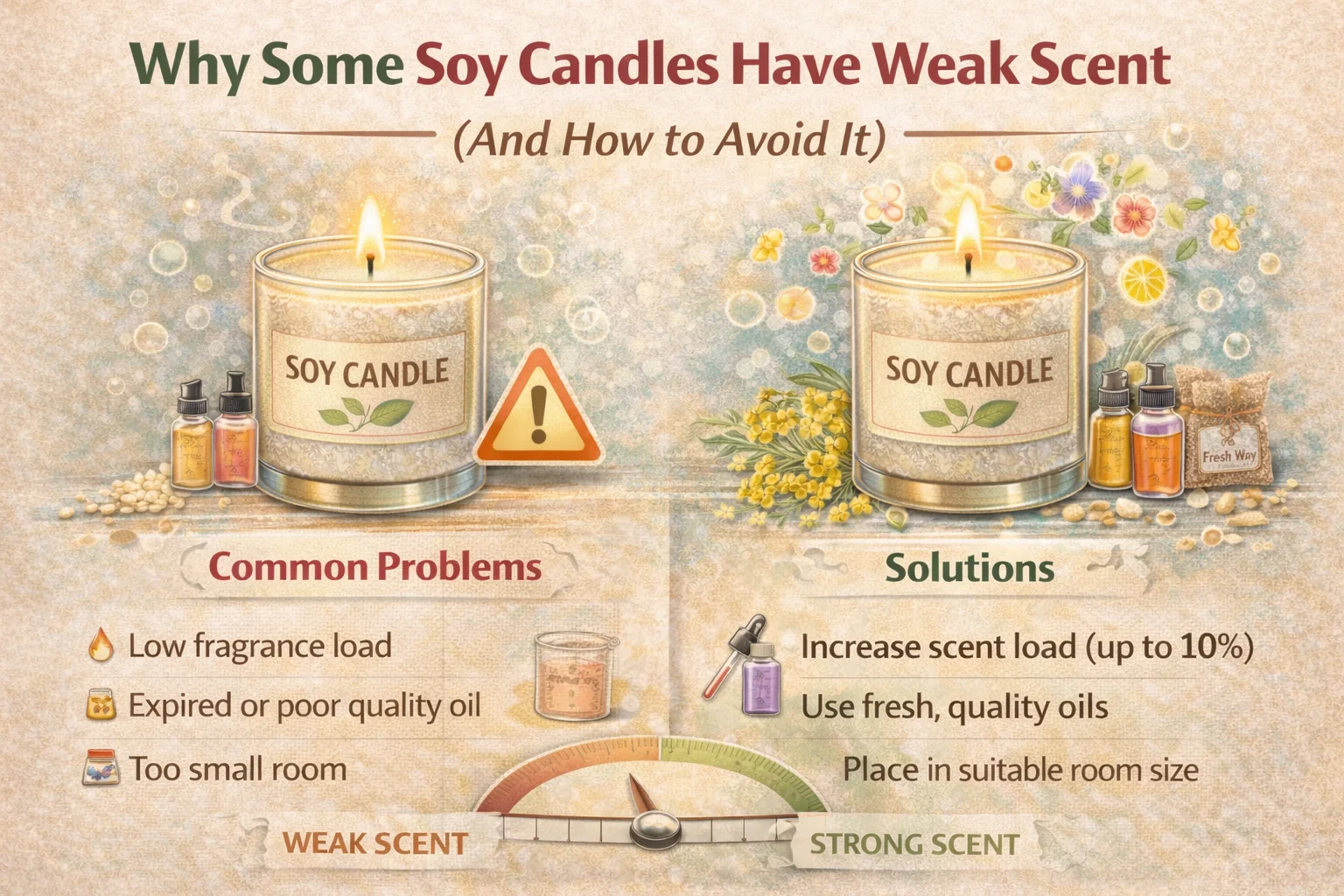
A “weak scent” soy candle can be frustrating: it looks beautiful, burns cleanly, and yet the room barely smells like anything. The good news is that scent strength is not magic—it's the result of a few predictable factors, from wax chemistry to wick choice to how you use the candle at home. Once you know what to look for, you can shop smarter, burn smarter, and avoid most disappointments.
This guide breaks down the real reasons some soy candles smell faint, how to spot the warning signs before you buy, and what you can do to get the strongest, most satisfying fragrance performance without sacrificing a clean, comfortable burn.
The Two Scents That Matter: Cold Throw vs Hot Throw
Candle scent performance has two “modes,” and confusing them is one of the most common reasons people think a candle is weak. The first is cold throw: how strong the candle smells when it’s not lit. The second is hot throw: how strong it smells while burning and after it has warmed the wax pool.
A candle can have a strong cold throw but a weak hot throw if the wax doesn’t release fragrance efficiently when heated, if the wick is too small, or if the melt pool never gets wide enough. The opposite can happen too: a candle may smell subtle on the shelf but bloom once it reaches a proper burn temperature. Evaluating both throws is the key to judging a candle fairly.
Why Soy Can Be Subtler Than Other Waxes
Soy wax is loved for its creamy look and typically cleaner burn characteristics, but it can be naturally more “reserved” with fragrance compared to some paraffin blends. That doesn’t mean soy can’t be strong—it absolutely can—but it often needs better formulation and proper pairing with fragrance oils and wicks to reach its full potential.
Some soy candles are intentionally designed for a gentler, more background scent. If you’re expecting a bold, whole-house aroma, you’ll want to choose candles specifically made for strong hot throw and sized correctly for your space.
The Most Common Causes of Weak Scent in Soy Candles
Weak scent usually comes down to one or more of these factors. Understanding them helps you avoid buying candles that can’t realistically perform the way you want.
Not Enough Fragrance Load (Or the Wrong Type of Fragrance)
The “fragrance load” is the percentage of fragrance oil blended into the wax. Too little fragrance can lead to a faint hot throw. But more isn’t always better: overloading soy wax can cause sweating, poor burning, or muted performance if the wax can’t hold and release the oil properly.
Beyond quantity, the type of fragrance matters. Some fragrance profiles naturally project better in candles—think certain gourmands, ambers, and strong aromatics—while delicate notes can be subtle unless the formula is tuned for them. A candle labeled “linen,” “air,” “cotton,” or “light florals” may be intentionally soft even if it’s high quality.
Poor Wick Choice: The Melt Pool Never Gets Hot Enough
The wick is the engine of the candle. If the wick is too small for the jar diameter or wax blend, the candle may tunnel—melting only a small circle in the center. That shallow melt pool often means the fragrance isn’t heated and diffused across enough surface area to fill the room.
Even if there’s no obvious tunneling, an under-wicked candle can run “cool,” producing a gentle flame and a small melt pool that releases scent slowly. This is one of the biggest reasons a candle smells weak even when it’s well-made otherwise.
Wax and Fragrance Compatibility Issues
Not all soy waxes behave the same. Different soy blends have different melt points, crystal structures, and ways of holding fragrance. If a maker uses a wax that doesn’t pair well with a specific fragrance oil, the scent can stay “trapped” or come across flat when burned.
Compatibility is one reason experienced makers test the same scent in multiple wax bases and adjust wick sizes accordingly. When testing is rushed or skipped, weak hot throw becomes more likely.
The Candle Wasn’t Cured Long Enough
Soy candles typically benefit from cure time after pouring. During curing, the wax structure stabilizes and fragrance integrates more evenly. A candle burned too soon after it’s made can smell faint or inconsistent because the fragrance hasn’t fully settled into the wax matrix.
If you’ve ever noticed a candle smells better after it sits for a week or two, curing is likely part of the explanation.
Jar Size vs Room Size Mismatch
A small candle in a large open-plan room will often feel weak, no matter how good the formula is. Scent isn’t just about intensity—it’s about volume of fragrance molecules being released into the air and how quickly they disperse.
High ceilings, open kitchens, long hallways, and strong airflow can dilute a candle’s hot throw dramatically. In these spaces, you’ll usually need a larger jar, a candle designed for strong projection, or even multiple candles placed strategically.
Airflow, HVAC, and Where You Place the Candle
Air movement is a silent scent killer. A candle under a ceiling fan, near an AC vent, or in the direct path of a draft may burn unevenly and send fragrance in one direction rather than spreading it evenly. You might smell it only when you walk into a specific spot—then it disappears again.
Placement matters: candles generally perform best in a calmer area with gentle circulation, not a wind tunnel. Too much airflow can also shorten burn time and reduce melt pool stability.
Improper Burn Habits: The Candle Never Reaches Its Sweet Spot
Many candles need enough time to create a full melt pool across the top. If you light a candle for short bursts—ten or twenty minutes—then blow it out, it may never warm enough to release fragrance effectively. You can end up with tunneling and permanently reduced performance.
Trimming the wick also matters. If the wick is trimmed too short, the flame may be too small to heat the wax properly. If it’s left too long, you can get soot and an overly hot burn that distorts the fragrance. Balance is everything.
How to Avoid Weak-Scent Soy Candles When Shopping
You don’t need to be a candle chemist to buy better. A few simple checks can help you pick candles that are more likely to deliver the scent level you want.
Look for Performance Clues, Not Just Buzzwords
Marketing terms like “natural,” “clean,” and “eco” don’t guarantee strong hot throw. Instead, look for brands that talk about performance: burn testing, wick sizing, room-filling throw, and recommended room size. Makers who test often share practical details because they know it builds trust.
Choose the Right Scent Family for Your Expectations
If you want a bold scent, pick profiles that typically project: warm ambers, vanillas, spices, richer woods, and many gourmand blends. If you pick “fresh air,” “soft cotton,” or a whispery floral, expect a lighter experience unless the brand explicitly promises strong throw.
Size Matters More Than Most People Think
Match candle size to the room. A small jar can be perfect for a bedroom, office, or bathroom, but may struggle in a large living area. When in doubt, go one size up, especially in open spaces with airflow.
Prefer Brands That Share Wick and Jar Details
Transparent makers often mention jar diameter, wick type (single vs double wick), and burn recommendations. Double-wicked candles in wider jars can create a broader melt pool faster, which often improves hot throw in larger rooms.
Read Reviews for “Hot Throw” Mentions
Reviews are most useful when they mention room size and burn time. Look for phrases like “fills the room,” “strong hot throw,” “noticeable down the hallway,” or “best in a small space.” If multiple people say “subtle,” “light,” or “only smells close up,” believe them.
How to Get Better Scent From a Soy Candle You Already Own
Sometimes the candle is fine—it just needs better conditions. Try these practical adjustments before you give up on it.
Let It Form a Full Melt Pool
On the first burn, allow enough time for the wax to melt edge-to-edge across the top. This sets the candle up for even burns later and usually boosts scent release. If you routinely burn for very short periods, scent and performance often suffer.
Trim the Wick Correctly
A properly trimmed wick helps keep the flame stable, encourages an even melt pool, and supports steady fragrance diffusion. If the flame seems tiny and the candle is tunneling, the wick may be too short; if it’s flickering wildly or smoking, it may be too long. Aim for a neat, controlled flame that’s strong enough to heat the wax without producing soot.
Move It Away From Drafts and Vents
Try relocating the candle to a more stable spot. A calm corner of a room often performs better than a table under a fan or near an AC vent. If you want fragrance to travel, place the candle where gentle circulation can carry scent outward rather than immediately whisking it away.
Give It a Chance to Cure
If the candle is new, letting it sit with the lid on (or covered) for a week or two can sometimes improve hot throw, especially for soy. Store it in a cool, dry place away from direct sunlight and strong odors.
Use the Right Candle for the Right Space
If your room is large, consider using a larger candle, a stronger fragrance family, or two smaller candles placed apart. This can create a more even scent “field” than relying on one small jar to do all the work.
Red Flags That a Candle May Always Smell Weak
Some candles won’t improve much no matter what you do. Watch for these signs.
If the candle tunnels heavily from the first burn and never produces a wide melt pool, hot throw will likely remain low. If the wick is centered but the flame is consistently tiny, the candle may be under-wicked. If reviews repeatedly mention weak hot throw, it’s probably a formulation or testing issue rather than your room.
Another red flag is a candle that smells strong only when you put your nose close to the jar, but disappears completely a few steps away. That usually indicates poor diffusion rather than simply a “light” fragrance profile.
A Simple Buyer Checklist for Stronger-Scent Soy Candles
When you want to avoid weak scent, focus on practical signals instead of hype.
Choose a candle size that matches your room, especially in open spaces.
Prefer brands that mention testing, wick sizing, and performance expectations.
Read reviews that mention “hot throw,” room size, and how long they burned the candle.
Pick scent families known for better projection if you want bold fragrance.
Burn correctly: allow a full melt pool, manage wick length, and avoid drafts.
The Bottom Line
A weak-scent soy candle is rarely a mystery. Most issues come from wick and melt pool performance, fragrance compatibility, cure time, or simply using the wrong candle size for the space. With a few smart shopping habits and a better burn routine, you can dramatically increase your chances of getting the cozy, room-filling scent experience you expect.
If you consistently prefer strong fragrance, look for soy candles built for projection, consider larger or multi-wick jars for big rooms, and give each candle the conditions it needs to fully warm and release its aroma. The right candle, burned the right way, can make soy smell anything but weak.